
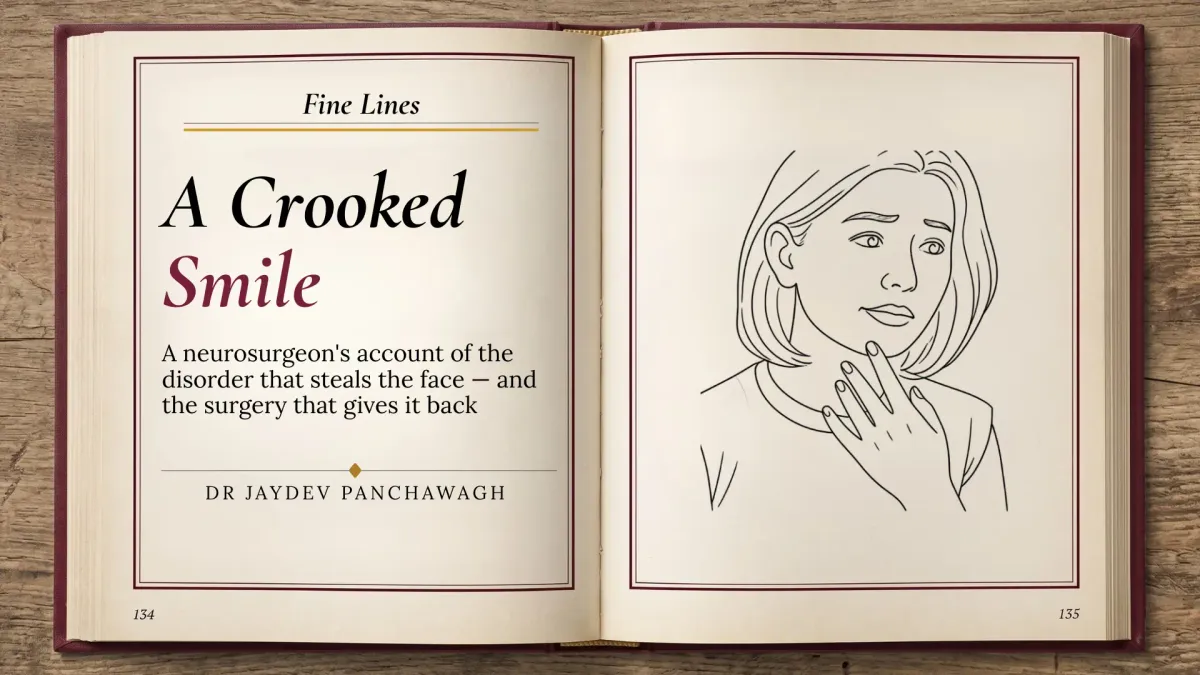
This neurological condition does not kill. It does not blind. It leaves no visible scar. And yet, in the quiet devastation it delivers to ordinary life, it ranks among the cruelest disorders I have encountered in a career spent operating inside the human nervous system.
“This condition does not kill. It does not blind. It leaves no visible scar. And yet — in a career spent operating inside the human nervous system — it ranks among the cruelest disorders I have encountered.”
— Dr Jaydev Panchawagh · MVD Surgery Centre, Pune
It is called Hemifacial Spasm — HFS, in the shorthand of neurology. In Marathi, lacking a precise equivalent, I once named it myself in an article: the disease of the winking eye. Or simply, the winking disorder. The name stuck. It fits, with uncomfortable accuracy.
Over the past twenty years, practising out of Pune, we have dedicated ourselves to this particular corner of neurosurgery: Microvascular Decompression (MVD). In that time, I have met hundreds of patients carrying this condition. I have watched it shrink lives. I have watched it affect relationships, employment and confidence. And I have, thankfully, watched surgery help many of them regain control of their faces and their lives.
This is what I want to write about. Not the disease alone — but the stories it produces, the misunderstanding that surrounds it, and the treatment that exists but remains unfamiliar to many who may need it.
What Exactly Happens
An involuntary movement that can be mistaken for a deliberate wink.
Picture the face of someone you know. Now imagine that, without warning or invitation, one side of that face begins to move on its own — in twitches and spasms.
It begins small. A flutter near the eye. A twitch of the eyelid — the kind every tired person has felt at the end of a long day. Easy to dismiss. Easy to wait out. But in hemifacial spasm, the waiting changes nothing. The flutter does not subside. It returns. It returns more often. It becomes a wink.
Over months and years, the spasm may spread down the face. The cheek joins the eye, then the corner of the mouth. One side of the face begins to contract repeatedly and involuntarily, sometimes at difficult moments: at a bank counter, in a classroom, at a reception desk or across the dinner table.
“The affected person may appear to be winking deliberately. In reality, the movement is involuntary and outside their control.”
Stories That Refuse to Leave
The social consequences can be as difficult as the physical symptoms.
Sandeep was in his mid-thirties when he came to our clinic in Pune, his wife Swati beside him. He held his right hand cupped against the right side of his face — a gesture I have seen many times. It is the posture of someone trying to hide themselves from the world.
Swati told me what had happened the previous week. Sandeep had been standing at a bus stop in Mumbai, reading a magazine. The woman to his right turned on him suddenly. She was furious. She said: “Aren’t you ashamed? Winking like that? Do it again and I will call the police.” Before he could explain, two bystanders had struck him.
This happened. It is not embellished. I write it as it was told to me, by the man who lived it.
“If only I had known this could be treated. If only someone had told me. The years I lost.”
Voices from Across India — and the World
From Chennai: a young woman who worked at the reception desk of a prominent company. At thirty-two, spasms arrived and affected the job she had built her career around.
From Jharkhand: a young man whose marriage proposals kept dissolving. From Mumbai: a man whose marriage ended. From Kerala: a sixty-five-year-old who had not slept soundly in years. From Africa: a young man who told me, with a quiet sadness I still remember, that no woman on any bus would sit across from him.
The Architecture of the Problem
How irritation of the facial nerve can produce involuntary contractions.
The facial nerve — the seventh cranial nerve — governs the muscles of facial expression. Smile, frown, blink and squint: all of it moves on this nerve’s command. Near its origin at the brainstem, there is a short transition region where the protective myelin sheath changes from central to peripheral myelin.
The Root Exit Zone — Where Vulnerability Lives
Think of the stitching at the cuff of a shirt sleeve. Usually seamless. But this delicate transition zone, often called the root exit zone, can be particularly vulnerable to irritation.
A blood vessel may come to rest against this segment and pulsate with each heartbeat. In neurosurgical language, this is a neurovascular conflict. Over time, repeated contact may disturb the myelin — the nerve’s electrical insulation. When insulation is disrupted, abnormal electrical activity can spread through the facial nerve and cause involuntary contractions of facial muscles.
The Surgery That Addresses the Cause
Microvascular Decompression aims to separate the offending vessel from the facial nerve.
Microvascular Decompression (MVD) is an established surgical treatment for appropriately selected patients with hemifacial spasm caused by vascular compression. Through a small opening behind the ear, the neurosurgeon reaches the nerve near the brainstem. The offending vessel is carefully moved away, and a small pad of Teflon or another suitable material is placed to keep it separated from the nerve.
The objective is to relieve the mechanical irritation while preserving the facial nerve. The operation requires detailed knowledge of the anatomy, microsurgical technique and careful protection of nearby structures, including those involved in hearing and balance.
“We are what we repeatedly do. Excellence, then, is not an act, but a habit.” — Aristotle
MVD Outcomes and an Honest Word on Botox
Treatment decisions should be based on an individual assessment of benefits, risks and alternatives.
Our Experience — MVD Surgery Centre, Pune
Our centre, established in 2004, has performed more than 775 MVD operations. Results have been presented at national and international conferences from 2014 through 2025. The centre has reported a low failure rate; outcomes and complication rates should always be interpreted in the context of the patient group, follow-up period and definitions used.
An Honest Word on Botox
Patients frequently ask about Botox — botulinum toxin injected to temporarily weaken the facial muscles responsible for the spasm. It can reduce symptoms for a period and may be appropriate for some people, particularly when surgery is not suitable or is not preferred. Its effect wears off, so repeat injections are often needed. Botox does not move a compressing blood vessel away from the nerve.
MVD and Botox are different approaches. The right option depends on the cause of the spasm, a patient's health, symptoms, preferences and an informed discussion with a specialist. No treatment is free of risk, and no result can be guaranteed.
The Dimension That Medicine Forgets
A facial movement disorder can affect identity, confidence and everyday connection.
Human faces are the medium through which we communicate almost everything that words do not carry — trust, interest, warmth and safety. When a face begins to move in ways its owner cannot govern, the very instrument of social connection can become a source of alarm. The person living inside that face may retreat.
For teachers, police officers, nurses, doctors, receptionists and performers — anyone whose work requires constant human interaction — the spasm can be more than a medical inconvenience. The psychological toll may compound over years: shame, exhaustion and the specific grief of watching one’s own face move involuntarily in public.
What Every Patient Deserves to Know
Understanding the diagnosis and available options is part of good care.
Hemifacial spasm is treatable. For selected patients whose symptoms are caused by vascular compression, MVD may offer durable relief by addressing the underlying contact between vessel and nerve. The degree and timing of improvement vary, and some patients may have persistent or recurrent symptoms.
Patients should not have to spend years cycling through treatments without understanding the diagnosis or the full range of options. Good counselling helps every patient understand what is happening, what investigations may be needed, what non-surgical and surgical options exist, and what an operation involves.
No one should be deprived of the knowledge that MVD exists and may be appropriate for some patients. Our obligation at the MVD Surgery Centre in Pune is to make sure people who need this information can find it and discuss it with a qualified specialist.
The author is a neurosurgeon based in Pune, with a specialised focus on Microvascular Decompression for trigeminal neuralgia and hemifacial spasm since 2004.
Continue Reading

The Eye That Winked Without Permission
A closer look at involuntary facial movements and the condition behind them.
Read More →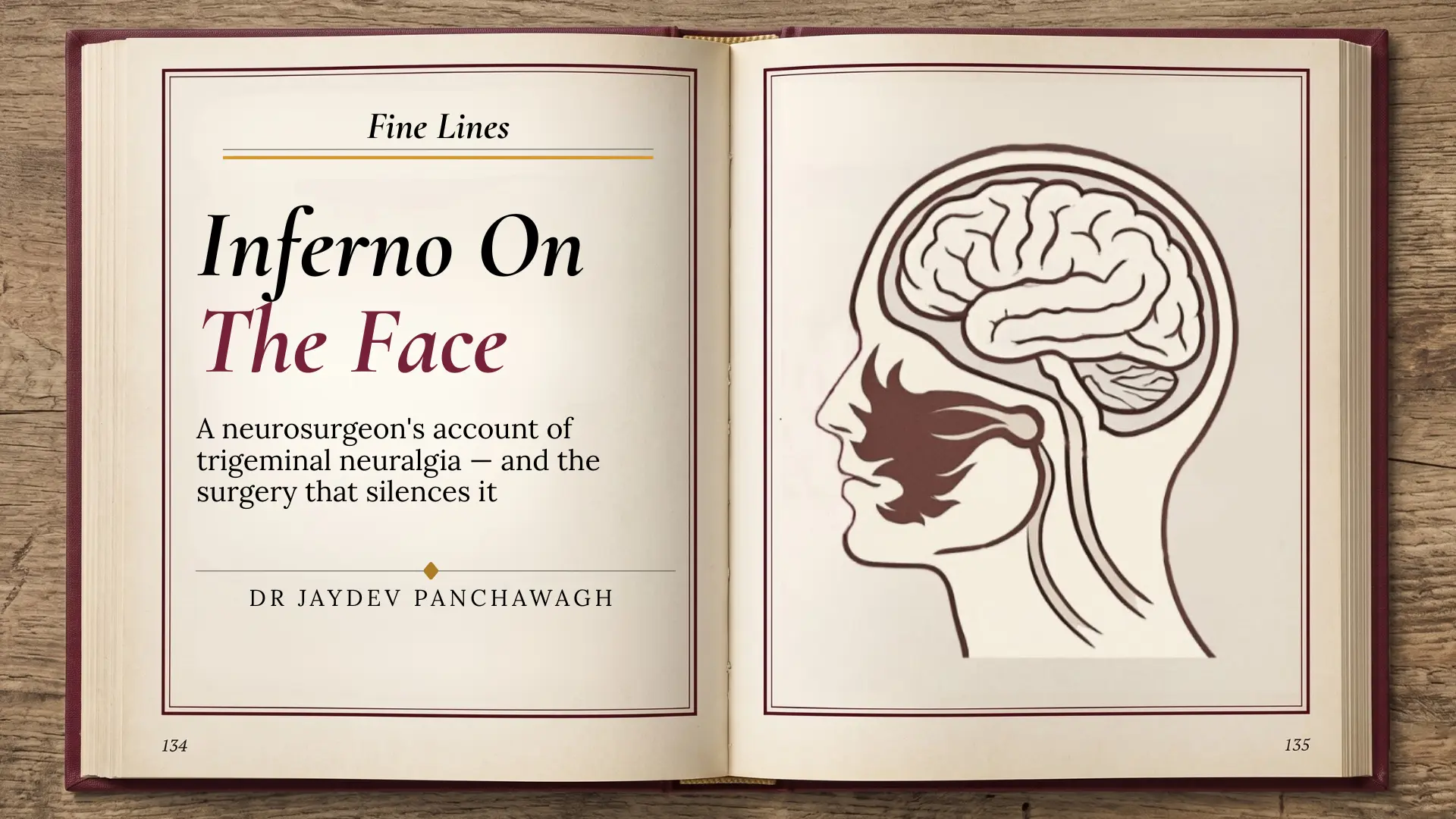
Inferno on the Face
Understanding facial nerve pain, vascular compression and treatment options.
Read More →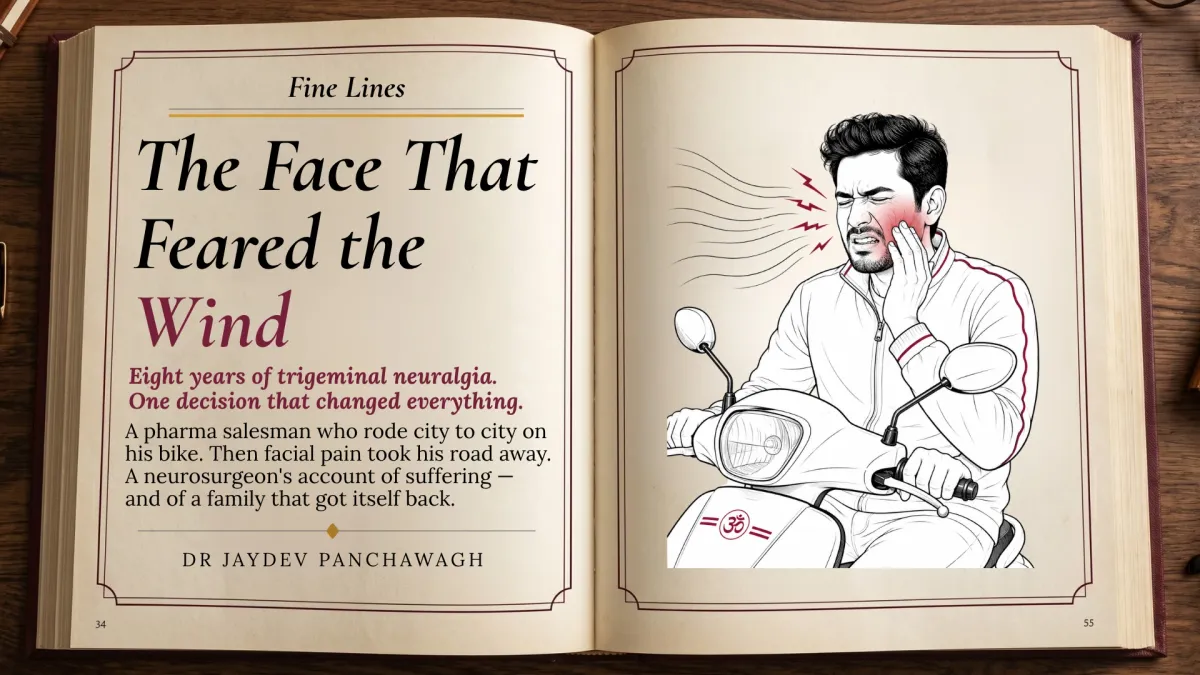
The Face That Feared the Wind
A patient’s journey through facial pain, diagnosis and MVD surgery.
Read More →Related Videos
Watch More Educational Videos From Dr. Jaydev Panchawagh on Hemifacial Spasm, Neurosurgery and Related Conditions.


