102, Bhagyatara Society, Erandwane, Pune, India
+91 9011333841, +91 7720948948

Advanced Brain Surgery in Pune
Precision, Innovation & Experience
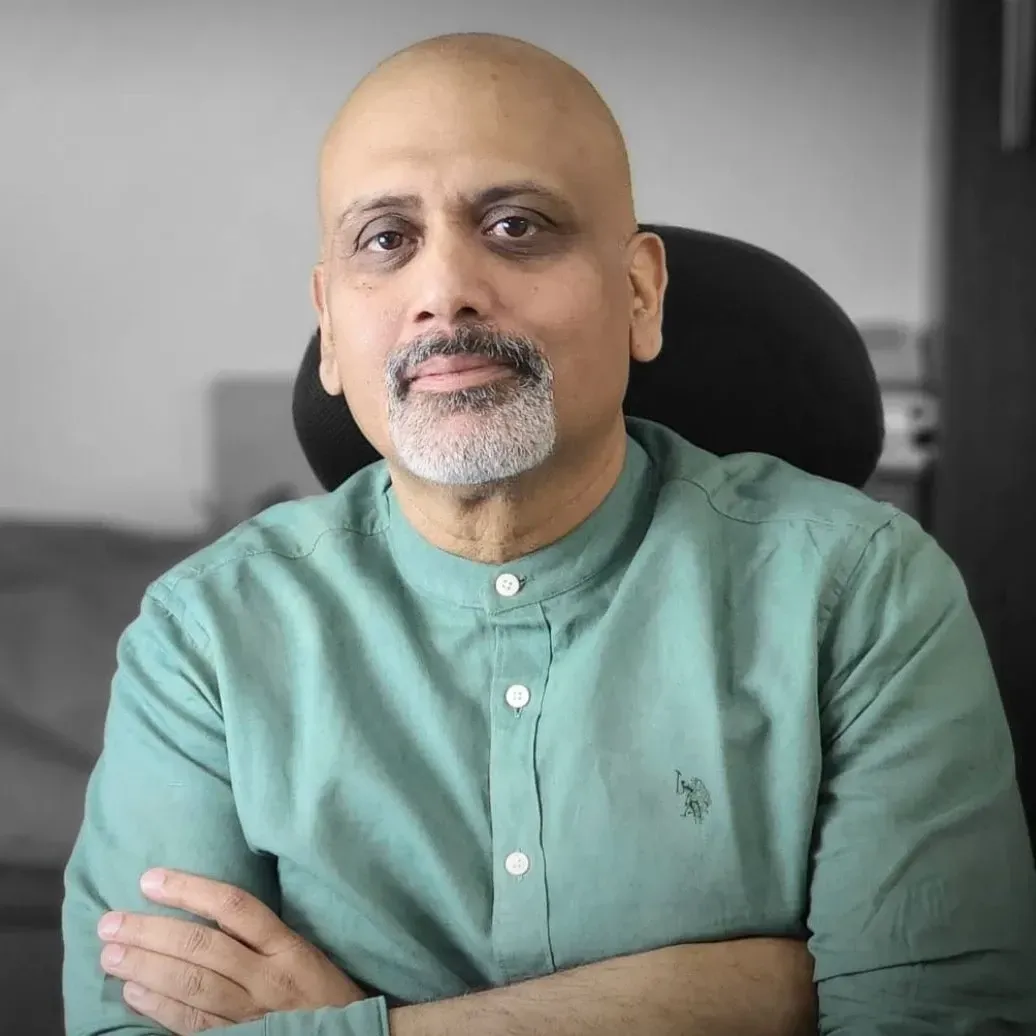
A brain tumour diagnosis, trigeminal neuralgia, hemifacial spasm, or glossopharyngeal neuralgia — whatever brings a patient here, the answer begins with experience. Over 30 years and more than 6,500 brain surgeries, Dr. Jaydev Panchawagh brings a depth of understanding to these conditions that only years at the operating table can build.
Expert Brain Surgeon in Pune, Maharashtra
Dr. Jaydev Panchawagh is one of Pune's most experienced brain and spine surgeons, with over 30 years of dedicated practice in neurosurgery and more than 10,000 surgical procedures performed. He holds an MS in General Surgery from KEM Hospital , Pune (1994) and an MCh in Neurosurgery from KEM Hospital, Mumbai (1998) — one of India's most prestigious neurosurgical training programmes.
He is a Consultant Neurosurgeon presently attached to Sahyadri SuperSpeciality Hospital Deccan Gymkhana, and Manipal Hospital, Baner. He was previously attached to Deenanath Mangeshkar Hospital, Pune. He is also the Founding Chairman of the Synapse Brain and Spine Foundation and serves as Director of the Centre of Excellence for MVD Surgery and Skull base surgery in Pune.
Dr. Panchawagh is particularly renowned for Microvascular Decompression (MVD) surgery, having performed over 3,000 MVD procedures for Trigeminal Neuralgia, Hemifacial Spasms, and Glossopharyngeal Neuralgia. He introduced Endoscopic Third Ventriculostomy (ETV) to Pune in 2000 following specialised training in Germany with Prof. Gaab, and has pursued further advanced training in neuronavigation and intraoperative MRI with Prof. Raabe and Prof. Seifert in Frankfurt.
Global Standards
Surgical techniques, technology, and protocols consistent with the world's leading neurosurgical centres.
Patient-First Approach
Every patient is seen as a person first. The surgical plan follows the conversation.
Clinical Expertise
Conditions We Treat
Providing advanced neurosurgical care for a wide spectrum of brain-related conditions.
Brain operations
Brain Surgery and treatments
Procedures performed with advanced technology and over 30 years of surgical experience.
The Technology
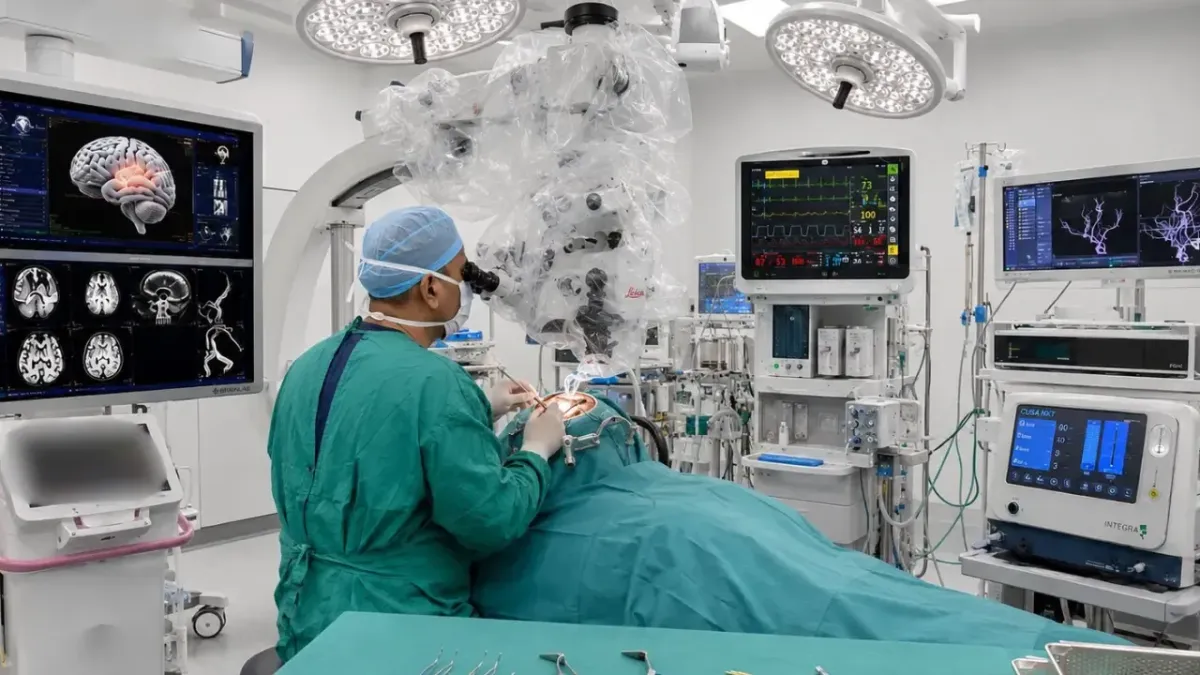
Advanced Surgical Arsenal.
CUSA (Ultrasonic Aspirator)
Ultrasonic Aspirator. Breaks down and removes tumour tissue with precision, protecting the nerves and blood vessels immediately around it.
Neuro-navigation (Surgical GPS)
Surgical GPS. A real-time 3D map of the brain that guides the surgeon to the exact location of the problem — with millimetre accuracy.
High-Powered Surgical Drills
Used to safely access the skull and spine, allowing precise entry to the operative field while minimising disruption to surrounding bone.
Neurosurgical Microscopes
Powerful magnification that allows the surgeon to see — and operate on — structures invisible to the naked eye.
Brain Endoscopes
Allows surgery through minimal openings, giving the surgeon a clear view of deep structures with the least possible disruption to surrounding tissue.
Intraoperative Neuromonitoring
Tracks brain and nerve activity throughout the procedure in real time — ensuring critical neurological functions are protected from the first incision to the last.
FAQ
Frequently Asked Questions
Q1: Who is the best neurosurgeon for brain surgery in Pune?
Dr. Jaydev Panchawagh is widely regarded as one of the most experienced neurosurgeons in Pune and Maharashtra. With an MCh in Neurosurgery from KEM Hospital Mumbai (1998), 30+ years of practice, and over 10,000 surgeries performed — including 3,000+ MVD surgeries — he is a trusted choice for complex brain conditions including tumours, aneurysms, trigeminal neuralgia, and hemifacial spasm. He consults at Manipal Hospital Baner and Sahyadri Hospital Deccan Gymkhana, Pune.
Q2: What conditions require brain surgery?
Brain surgery may be recommended for conditions including brain tumours (glioma, meningioma, acoustic schwannoma), brain aneurysms, arteriovenous malformations (AVMs), trigeminal neuralgia, hemifacial spasm, glossopharyngeal neuralgia, hydrocephalus, pituitary adenoma, colloid cysts, and Chiari malformation. Not every diagnosis leads to surgery — Dr. Panchawagh evaluates each patient individually and recommends surgery only when it is the most appropriate treatment.
Q3: What is the recovery time after brain surgery in Pune?
Recovery time depends on the type of procedure and the patient's overall health. Minimally invasive procedures such as endoscopic brain surgery or MVD surgery typically involve a hospital stay of 3–5 days and a return to light activity within 2–4 weeks. Open craniotomy for tumour removal may require 1–2 weeks in hospital and 4–8 weeks of recovery at home. Dr. Panchawagh's team provides a personalised rehabilitation plan and follow-up schedule for every patient.
Q4: What is MVD surgery and what does it treat?
Microvascular Decompression (MVD) is a microsurgical procedure that relieves pressure on cranial nerves caused by nearby blood vessels. It is the most effective long-term treatment for trigeminal neuralgia (severe facial pain), hemifacial spasm (involuntary facial twitching), and glossopharyngeal neuralgia (throat and ear pain). Dr. Panchawagh has performed over 3,000 MVD surgeries and is the Director of the Centre of Excellence for MVD Surgery in Pune. The procedure is performed under general anaesthesia through a small incision behind the ear and has a high success rate in experienced hands.
Q5: What is the cost of brain surgery in Pune?
The cost of brain surgery in Pune varies depending on the procedure, the hospital, and the complexity of the case. Minimally invasive procedures such as MVD surgery or endoscopic surgery are generally less costly than open craniotomy. For an accurate estimate, a consultation with Dr. Panchawagh is required, after which a detailed treatment plan and cost breakdown can be provided. Patients can contact the clinic directly at +91 9011333841 or via WhatsApp.
Q6: Is brain surgery in Pune safe? What are the risks?
Brain surgery performed by an experienced neurosurgeon using modern technology is considerably safer than it was even a decade ago. At this practice, advanced tools including neurosurgical microscopes, neuronavigation (surgical GPS), intraoperative neuromonitoring, CUSA (ultrasonic aspirator), and endoscopes are used to maximise safety and precision. As with any surgery, risks exist and are discussed in detail during the pre-surgical consultation. Dr. Panchawagh's team follows globally recognised protocols to minimise risk.
Q7: Can patients from outside Pune or outside India consult Dr. Panchawagh?
Yes. Dr. Panchawagh sees patients from across India — including Mumbai, Nashik, Kolhapur, Nagpur, and Hyderabad — as well as international patients from the Middle East, South-East Asia, and Africa. An initial video consultation can be arranged for patients who cannot travel immediately. Contact the clinic at +91 9011333841 or email [email protected] to arrange a remote consultation.
Q8: What is endoscopic brain surgery and how is it different from open surgery?
Endoscopic brain surgery uses a thin, lighted camera (endoscope) inserted through a small opening in the skull or through the nose, allowing the surgeon to see and operate on structures deep within the brain without opening the entire skull. It results in smaller incisions, less pain, shorter hospital stays, and faster recovery compared to traditional open surgery. Dr. Panchawagh introduced endoscopic techniques including ETV (Endoscopic Third Ventriculostomy) to Pune in 2000 after advanced training in Germany.
Get in Touch
Book an Appointment
Ready to take the first step? Contact us today for a consultation
Book an
Appointment
Contact us or our team to schedule your diagnostic visit.
+91 9011333841, +91 7720948948
102, Bhagyatara Society, Erandwane, Pune, India
Call Us
+91 9011333841
+91 7720948948
Visit Us
102, Bhagyatara Society
Erandwane, Pune
Clinic Hours
Mon – Sat
By Appointment Only
Quick Booking
Tap to message

Neurosurgery built on experience.
Guided by precision.
Centred on the patient


Links
Treatments
Contact
+91 9011333841, +91 7720948948
102, Bhagyatara Society, Erandwane, Pune, India
The information on this website is for educational purposes only and does not constitute medical advice. Consult a qualified neurosurgeon for guidance specific to your condition. Read full disclaimer →
Copyright @2026 | Dr. Jaydev Panchawagh | Praavi Medicare