102, Bhagyatara Society, Erandwane, Pune, India
+91 9011333841, +91 7720948948

Media Coverage
Dr. Jaydev Panchwagh in the Media: Trusted Voice in Neurosurgery
Explore interviews, articles, and news features showcasing Dr. Panchwagh’s expertise, patient stories, and his contributions to advancing brain and spine care.
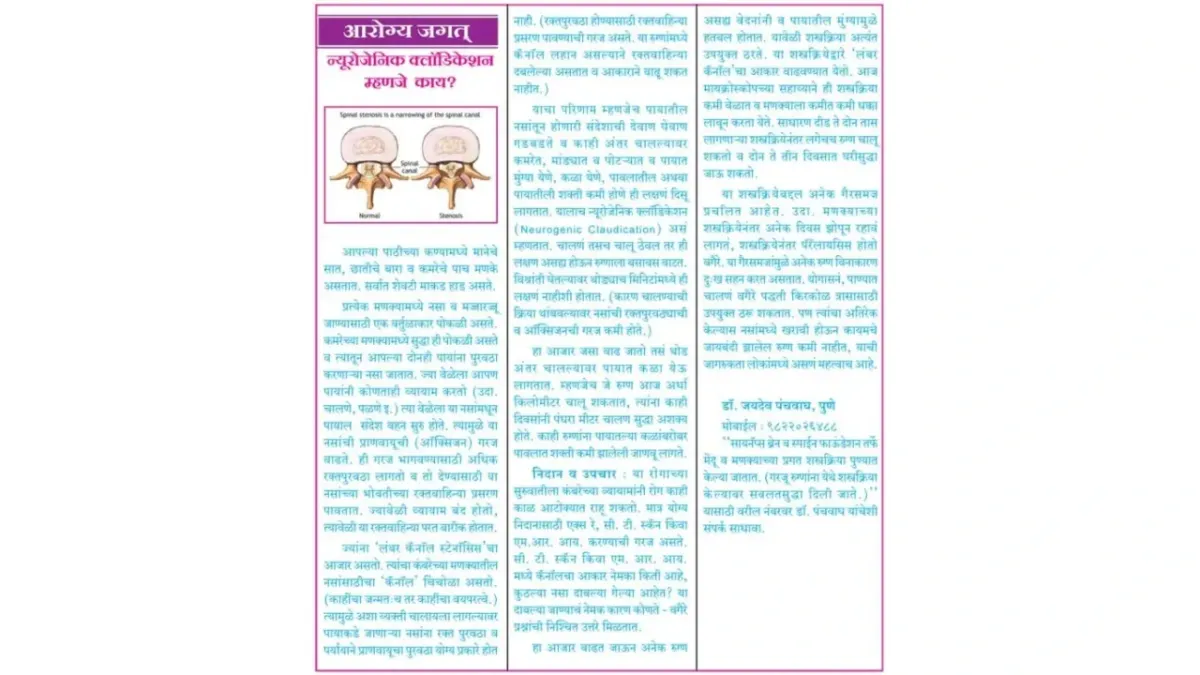
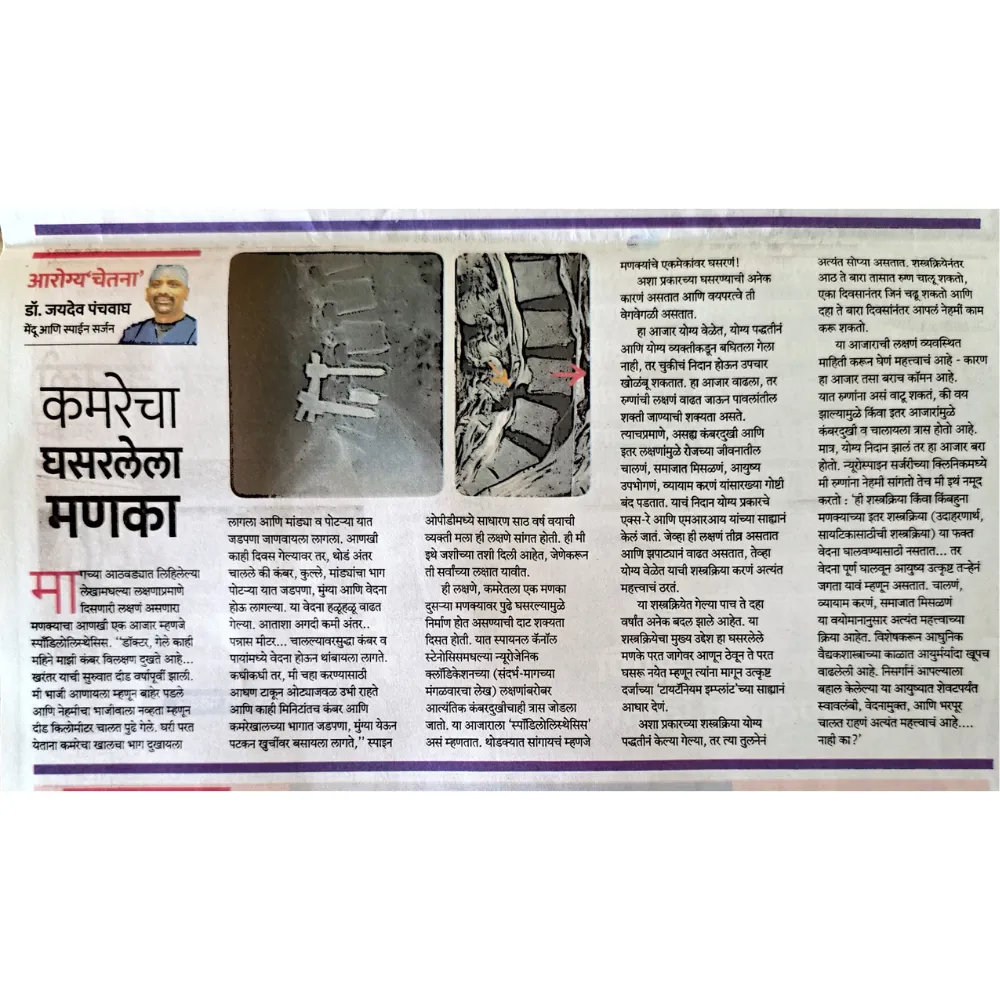
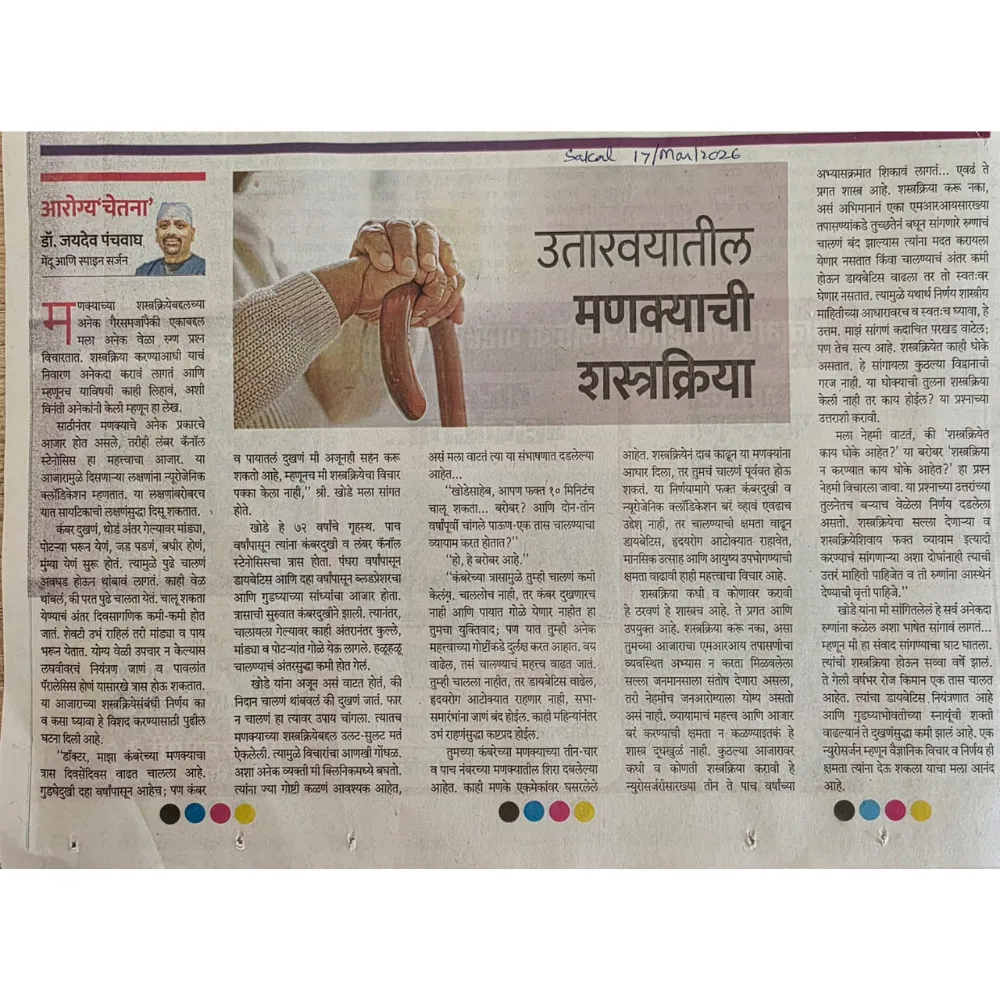
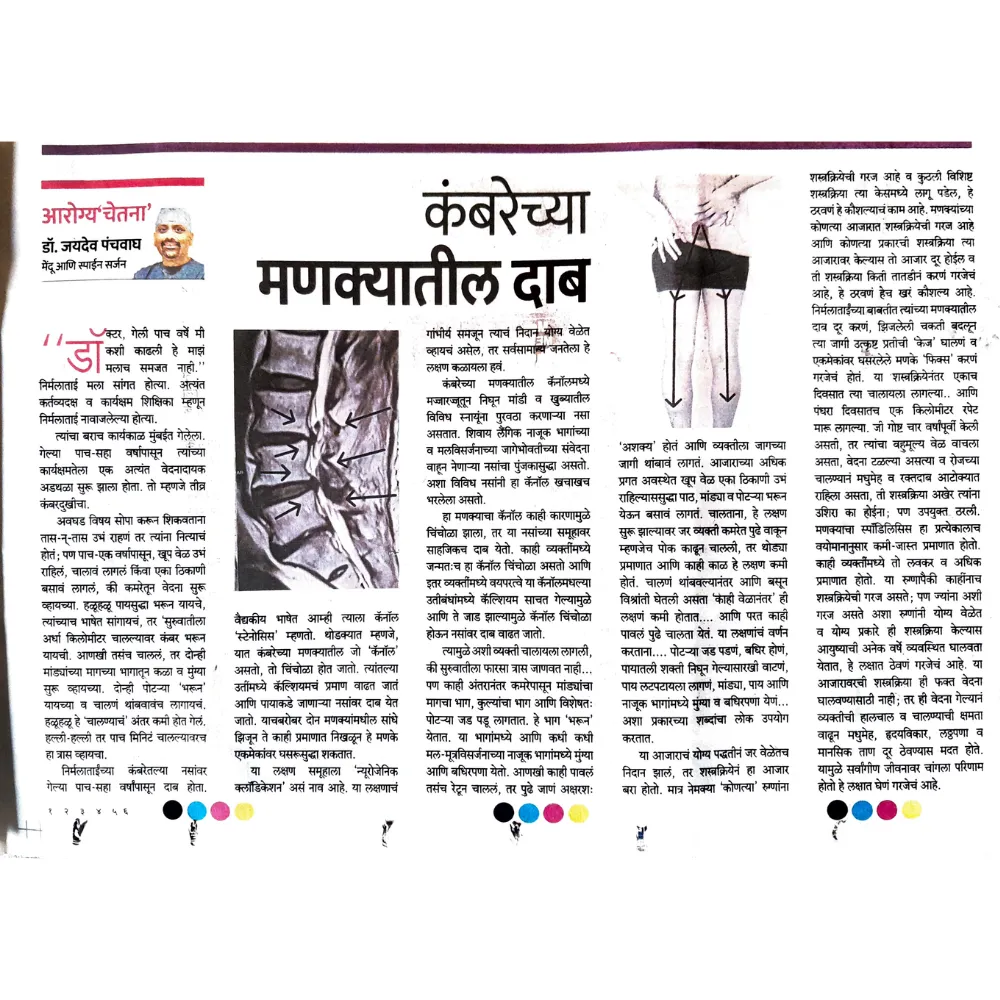
What is Neurogenic Claudication?
What is Neurogenic Claudication?
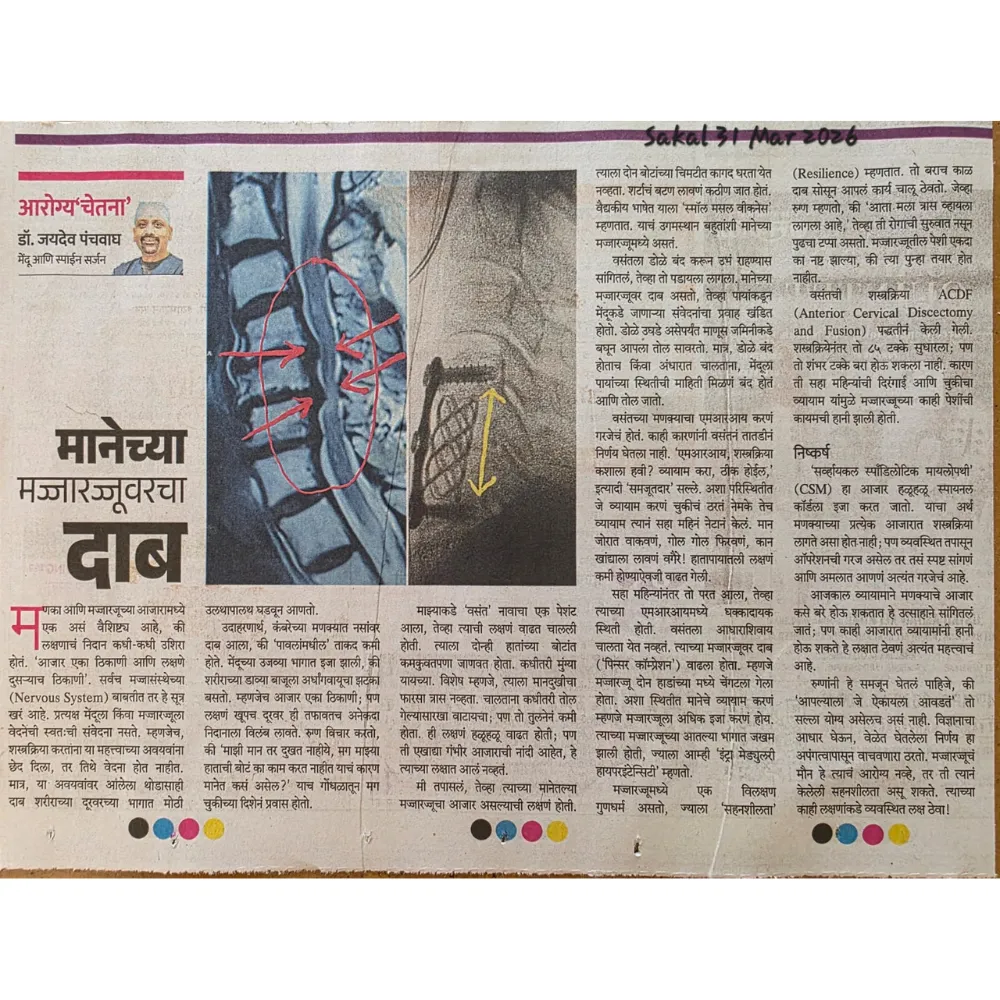
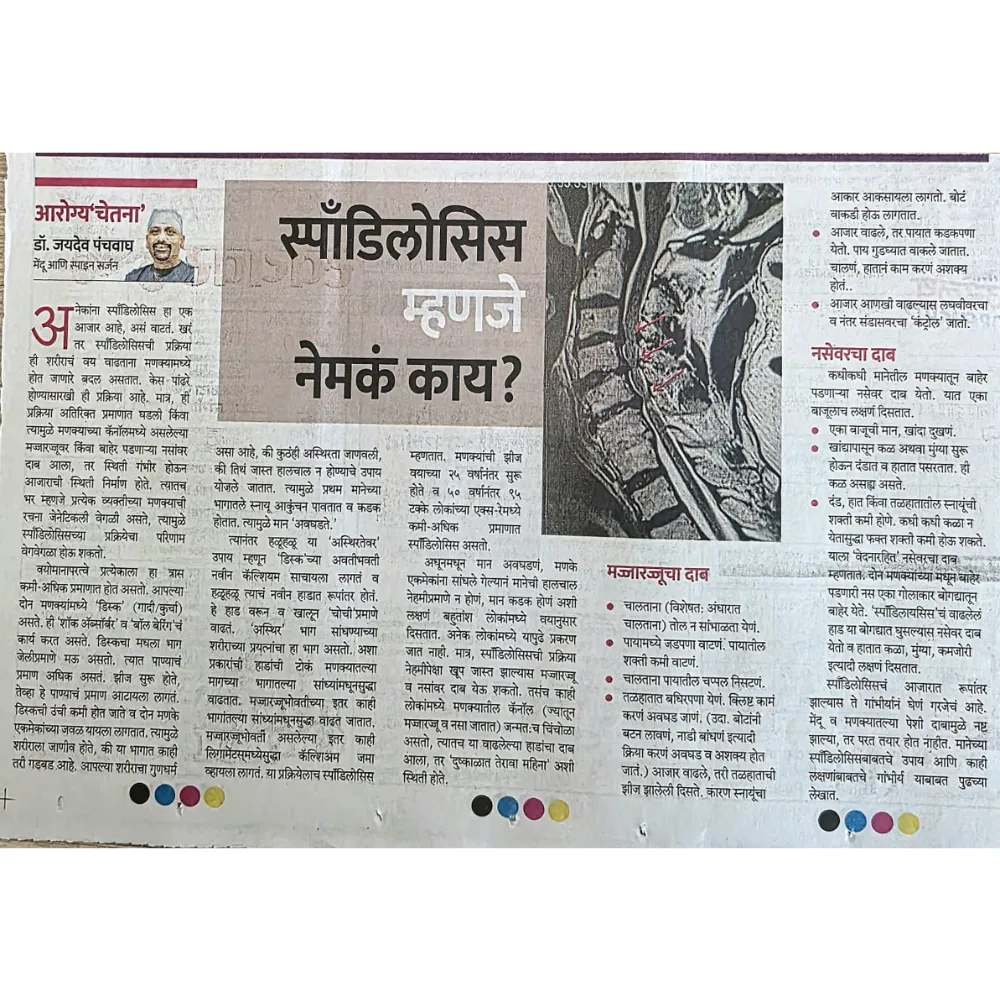
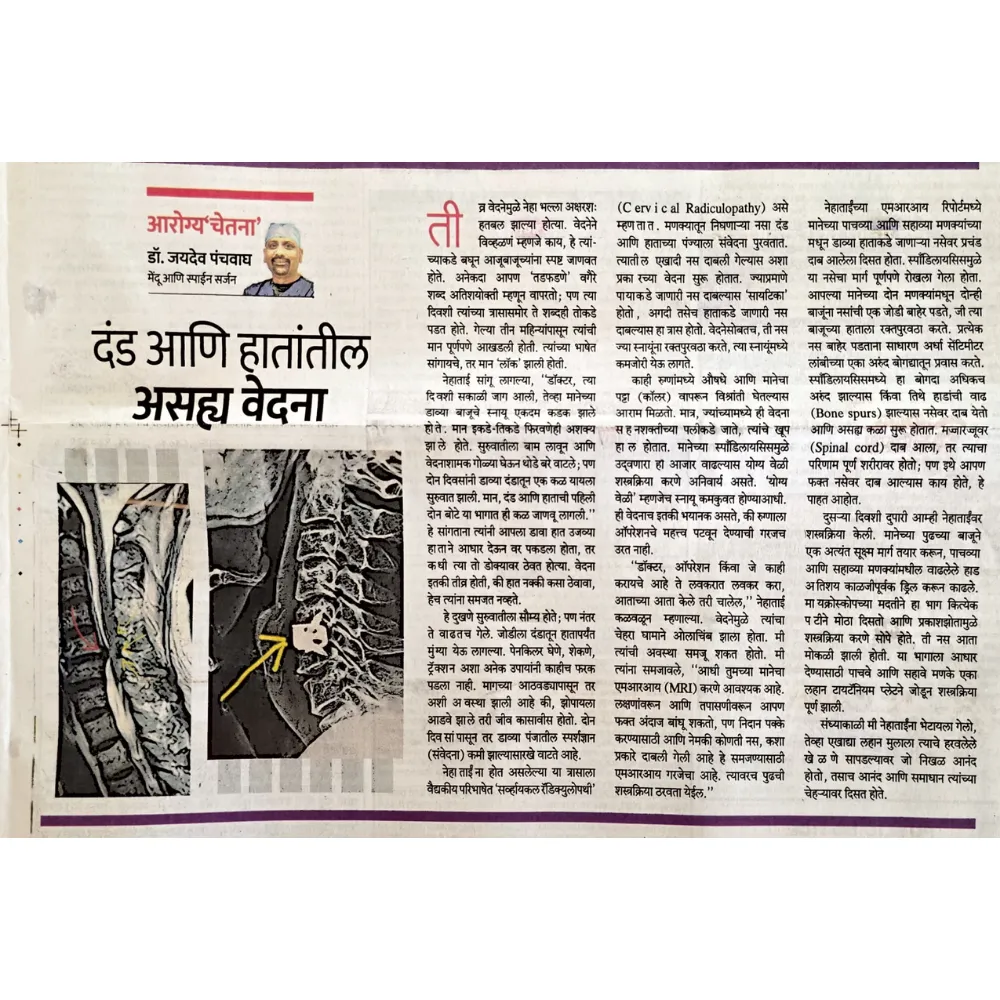
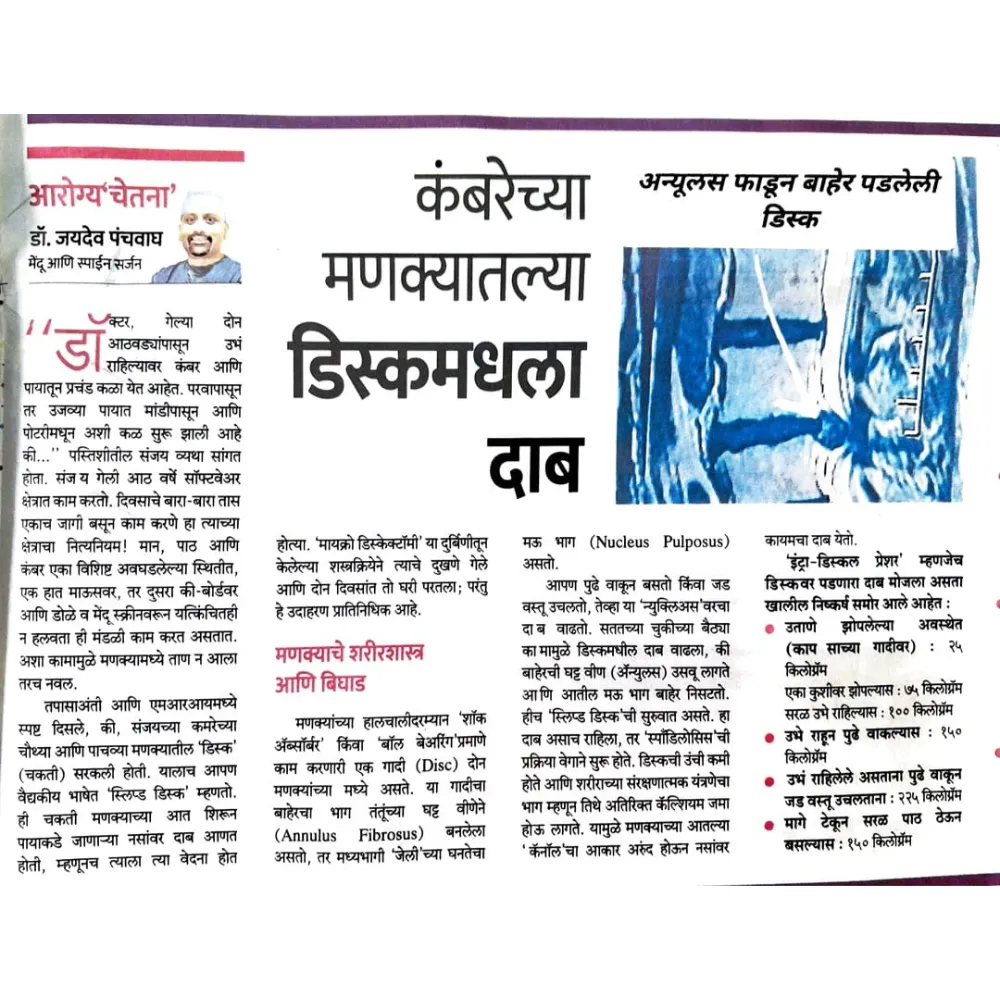
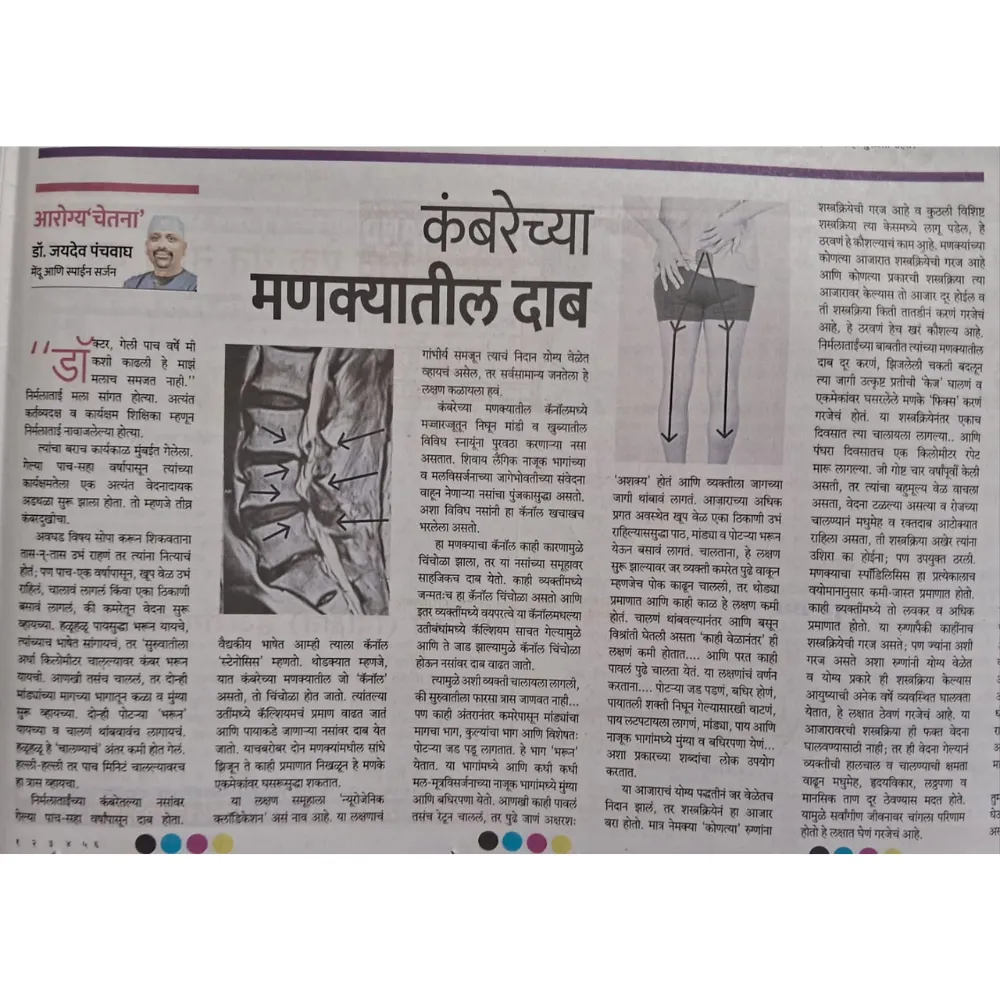
Our Spine is mainly made up of seven cervical vertebrae, twelve thoracic vertebrae, five lumbar vertebrae etc. The spinal cord lies within the canal that is at the centre of these vertebrae. The spinal cord gives rise to many spinal nerves that exit this central portion through many openings (foramina) in the spinal bones or vertebrae. If the space in the central portion of the bones is narrowed, it can lead to compression of either the spinal cord or the nerves that exit from it. The narrowing could be caused by degeneration of the bones at one or more levels, or because of disc prolapse.
This narrowing of the central portion of the vertebral column or spinal column in the lumbar area (waist area) is called Lumbar Canal stenosis. This leads to decreased electrical traffic in the nerves that go toward and away from the spinal cord. The symptoms of lumbar canal stenosis are tingling and numbness in one or both thighs, legs or feet, decreased sensation, inability to walk more than a few hundred metres etc.
Typically, the symptoms are relieved after resting for a few minutes. This is called neurogenic claudication. As the stenosis and compression worsen, the distance that he/ she can walk decreases and the patient may want to give up walking completely.
Treatment For Neurogenic Claudication
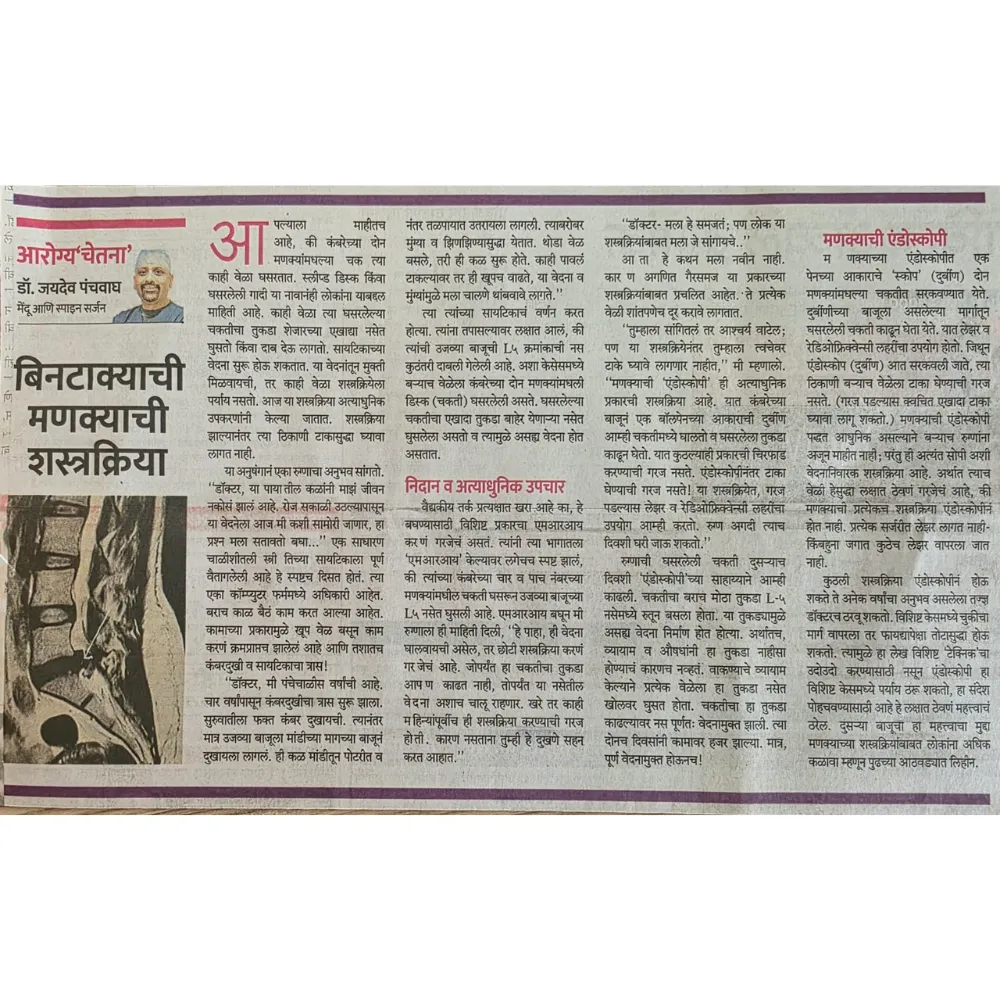
Initially exercises may relieve the symptoms, but as the stenosis or narrowing progresses the symptoms do not respond. X-rays, CT Scan, MRI etc are necessary to find out the exact site of compression and to plan surgery. Microscopic Lumbar Decompression is a good treatment option for this disease. This is generally done under General anaesthesia. The patient can begin walking within a few hours of surgery.
Myths about Spine Surgery
One would be surprised at the variety of wrong information in circulation about spine surgery. ‘One will remain confined to bed’, ‘paralysis of the legs can occur’, ‘back pain after operation’, ‘need to sleep in prone position only’ etc are some of the wrong information and myths that surround spine operations!!
While exercises and walking in water may help only a few people if the compression is mild, generally it is not useful in most. Surgery is necessary and relieves most symptoms. It is important for the patients to realise when they should opt for spine surgery


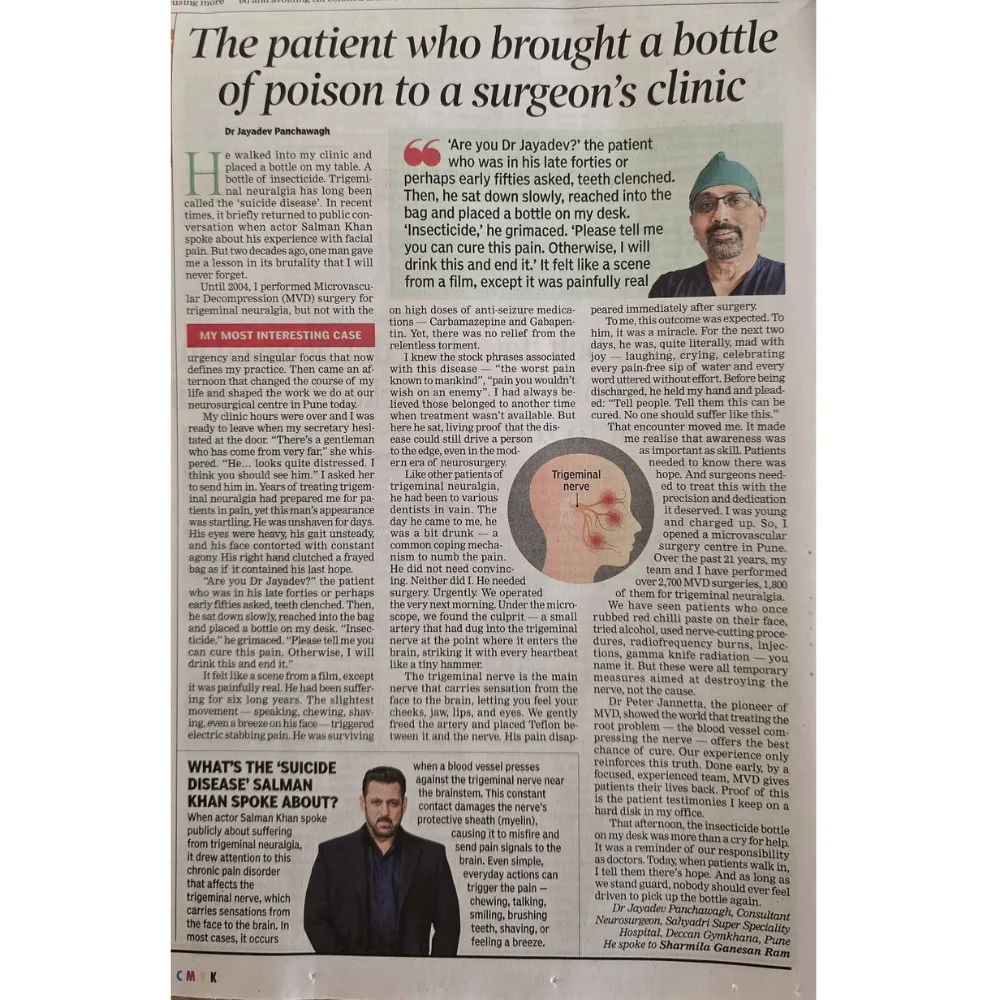
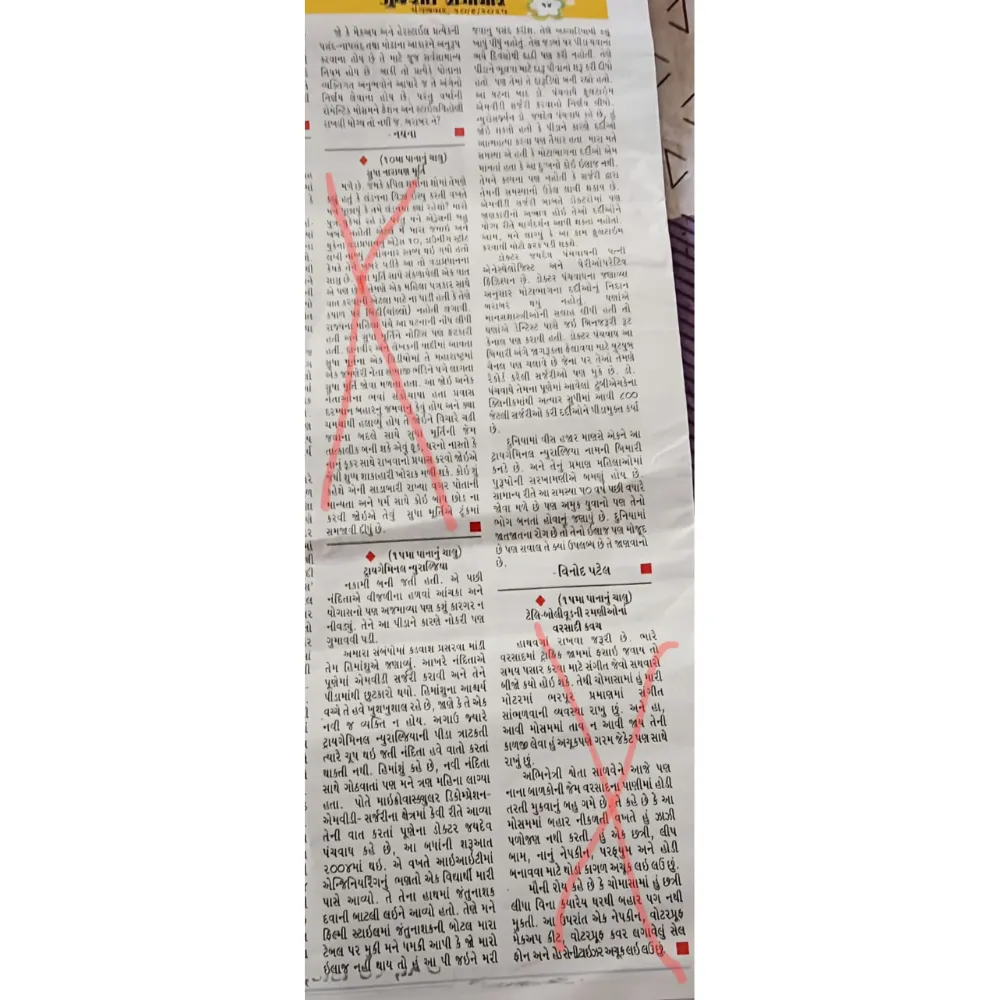
The patient who brought a bottle of poison to a surgeon’s clinic

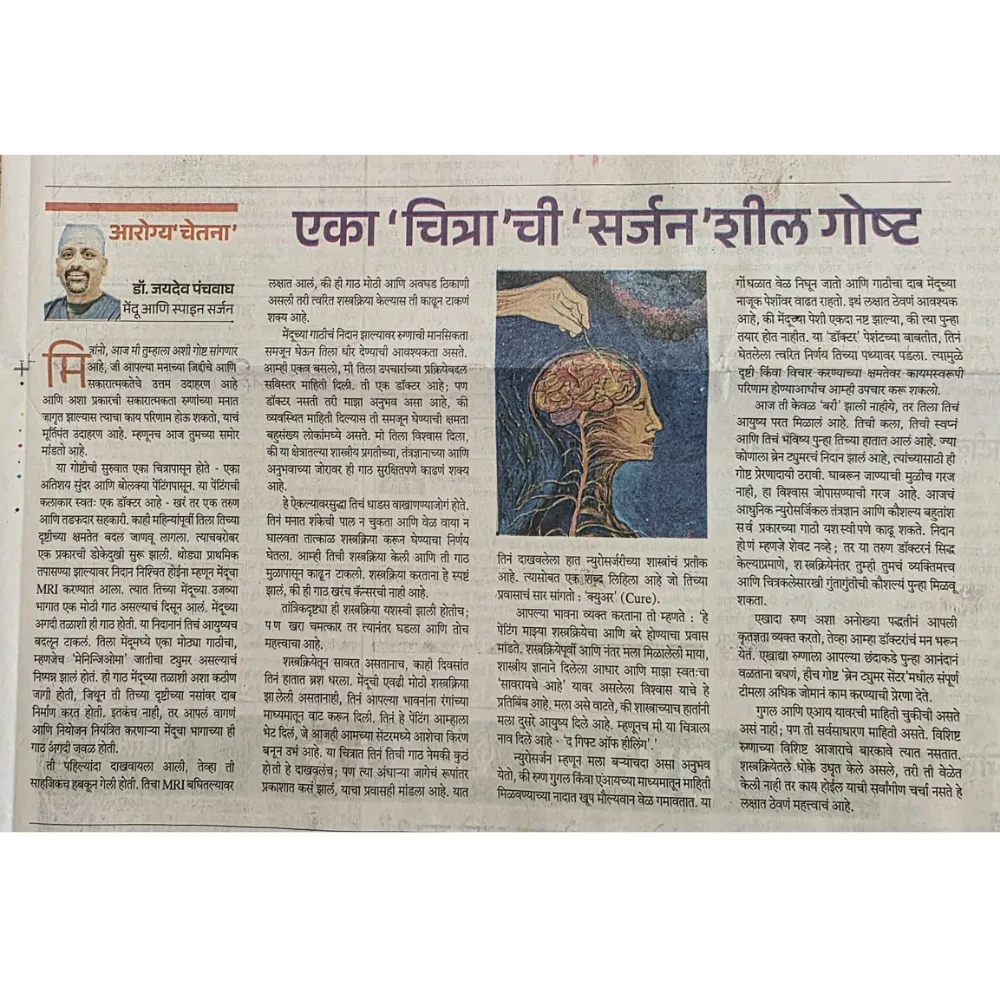
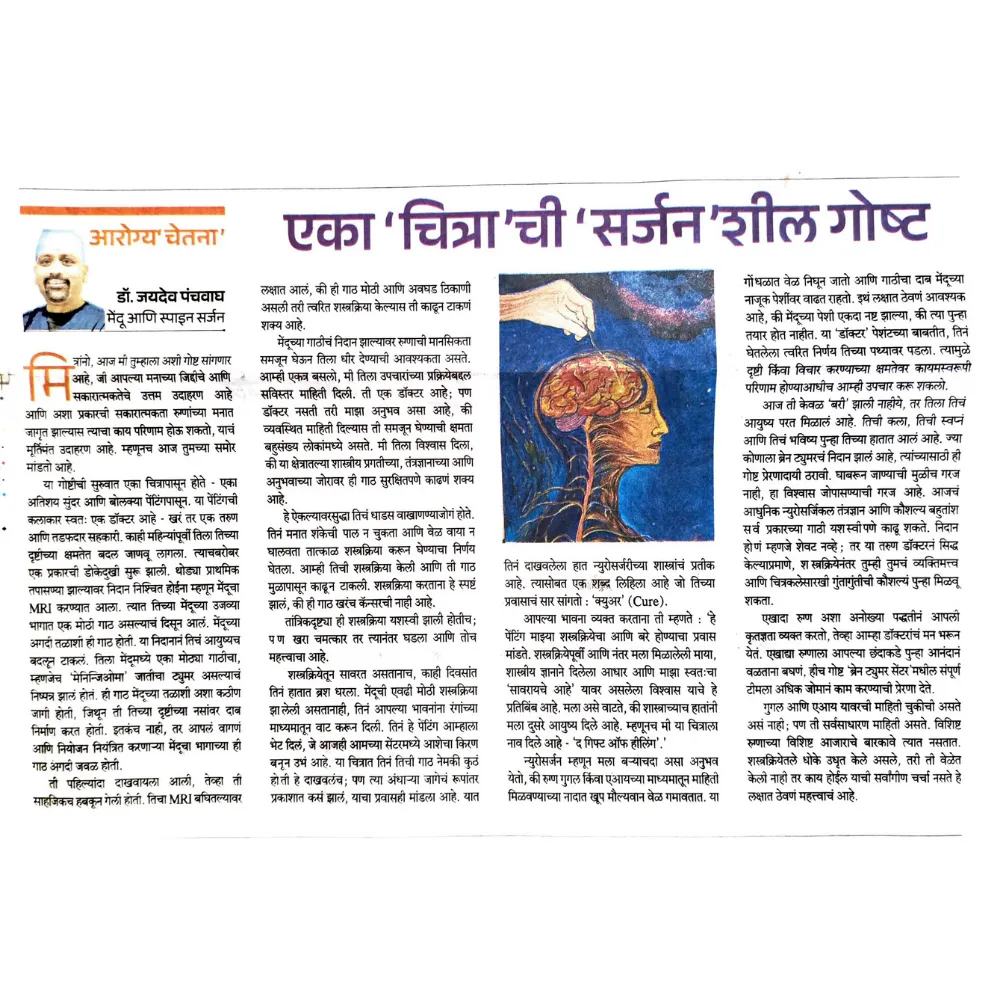
Scalpel, Stylus & Soul:
Exploring a
Neurosurgeon's Fine Art of the Brain

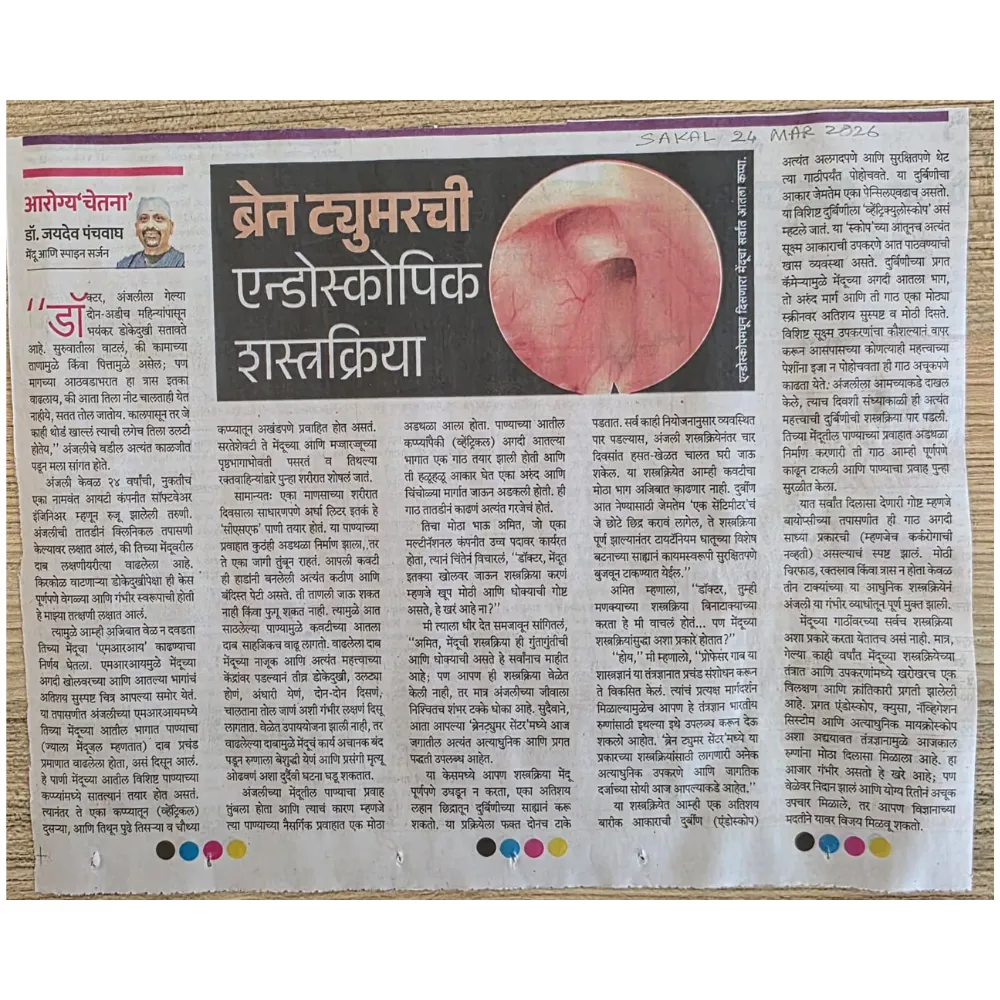
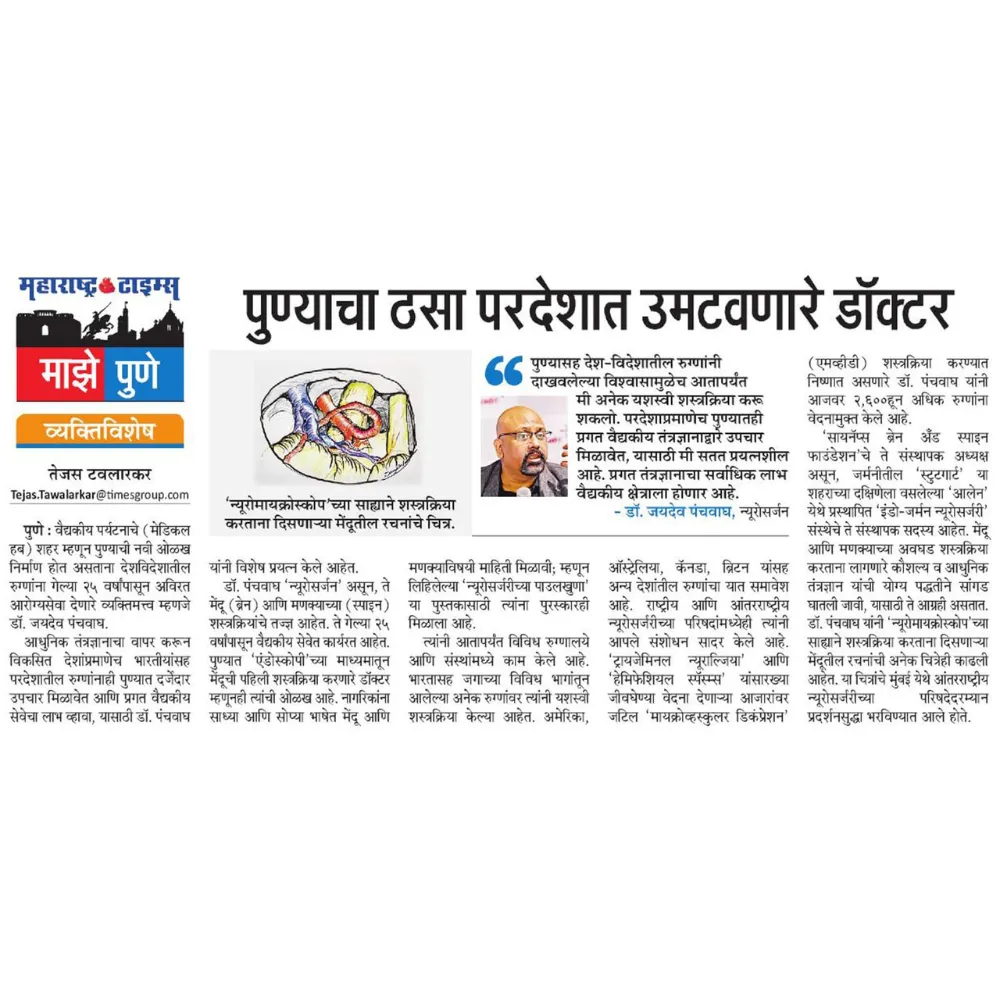
Brain Pictures Photos : शस्त्रक्रियेतून कलेपर्यंतचा प्रवास, डॉ. जयदेव यांनी चित्रांतून उलगडलं मेंदूचं जग, सुंदर कलेचा Video

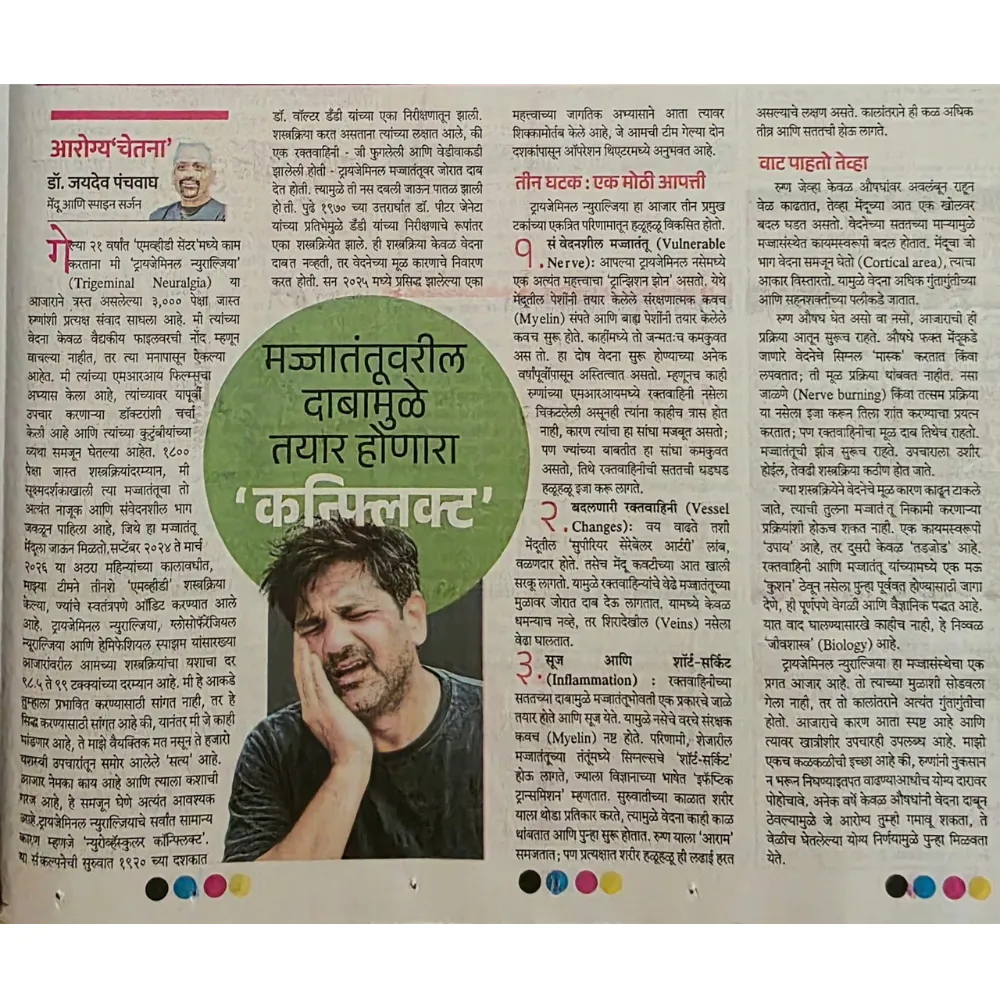
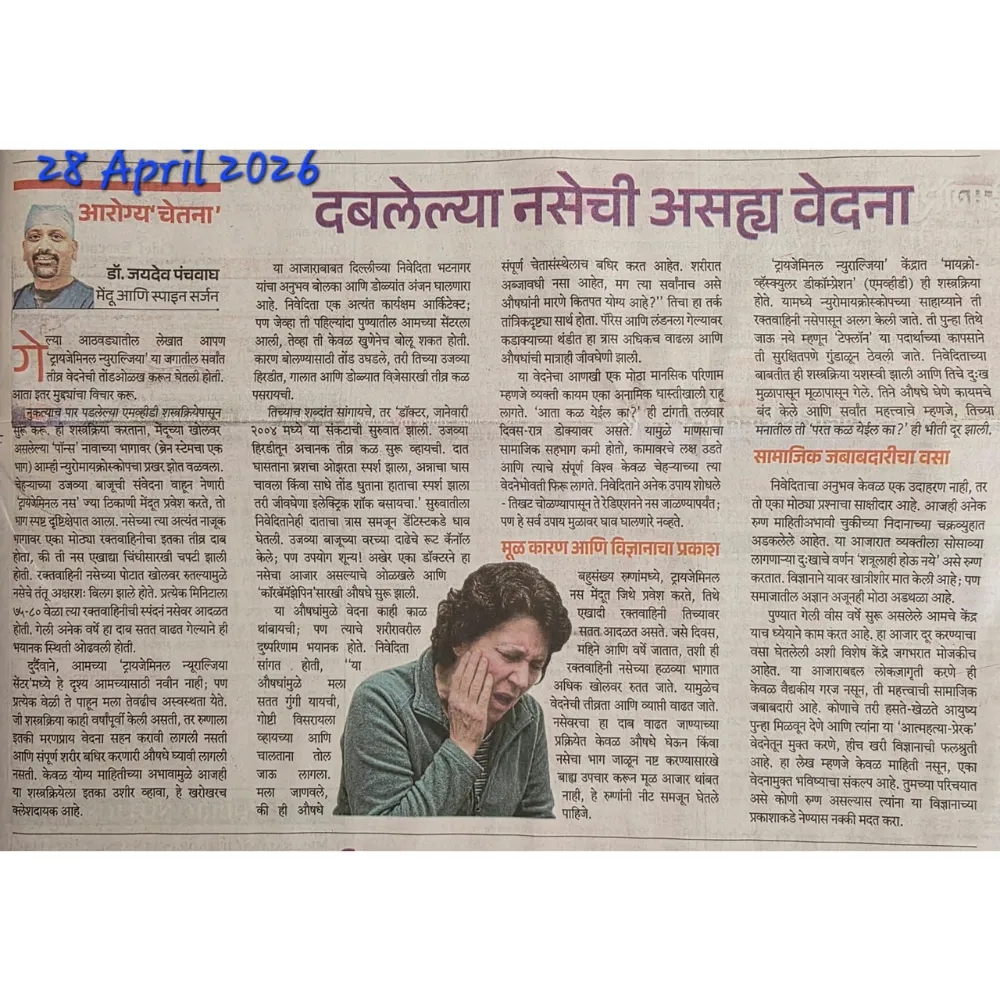
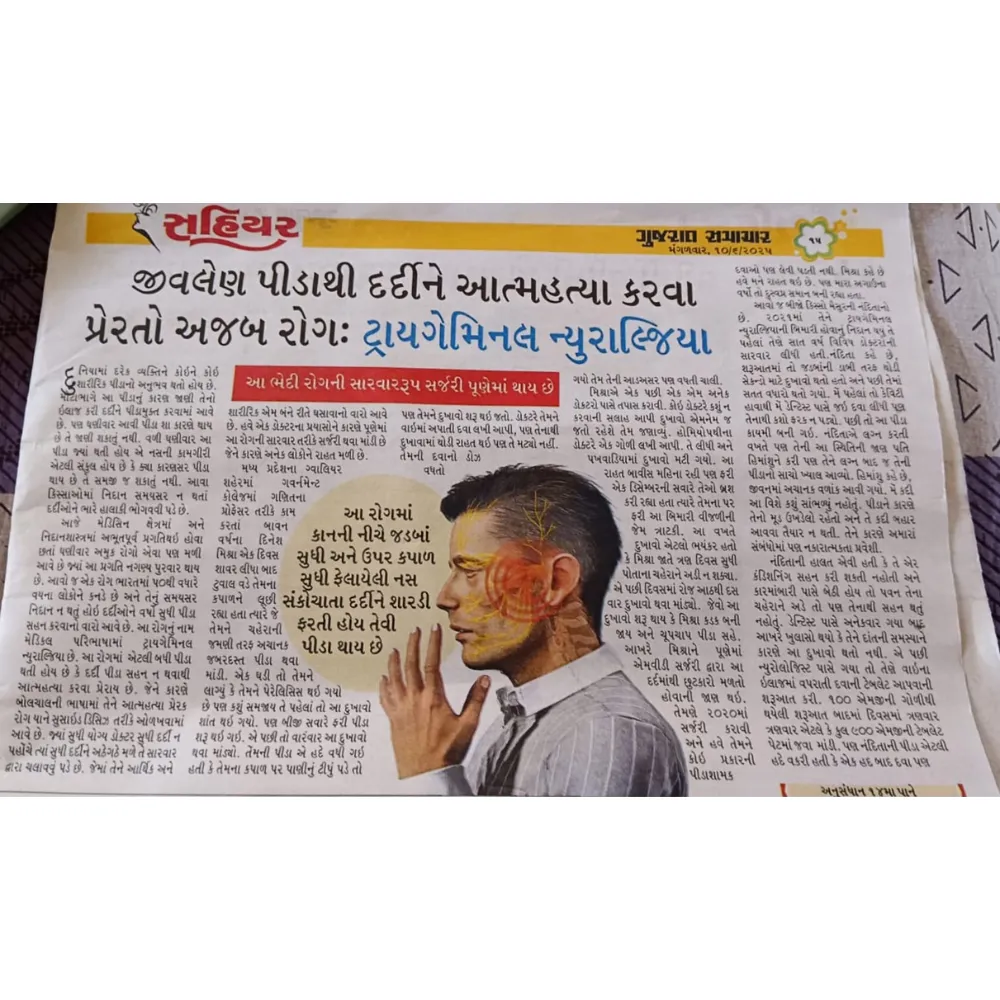
ट्रायजेमिनल न्यूरल्जिया डिसीजवर उपचार शक्य

How Varsha Atre, who was suffering from hemifacial spasms, got her smile back
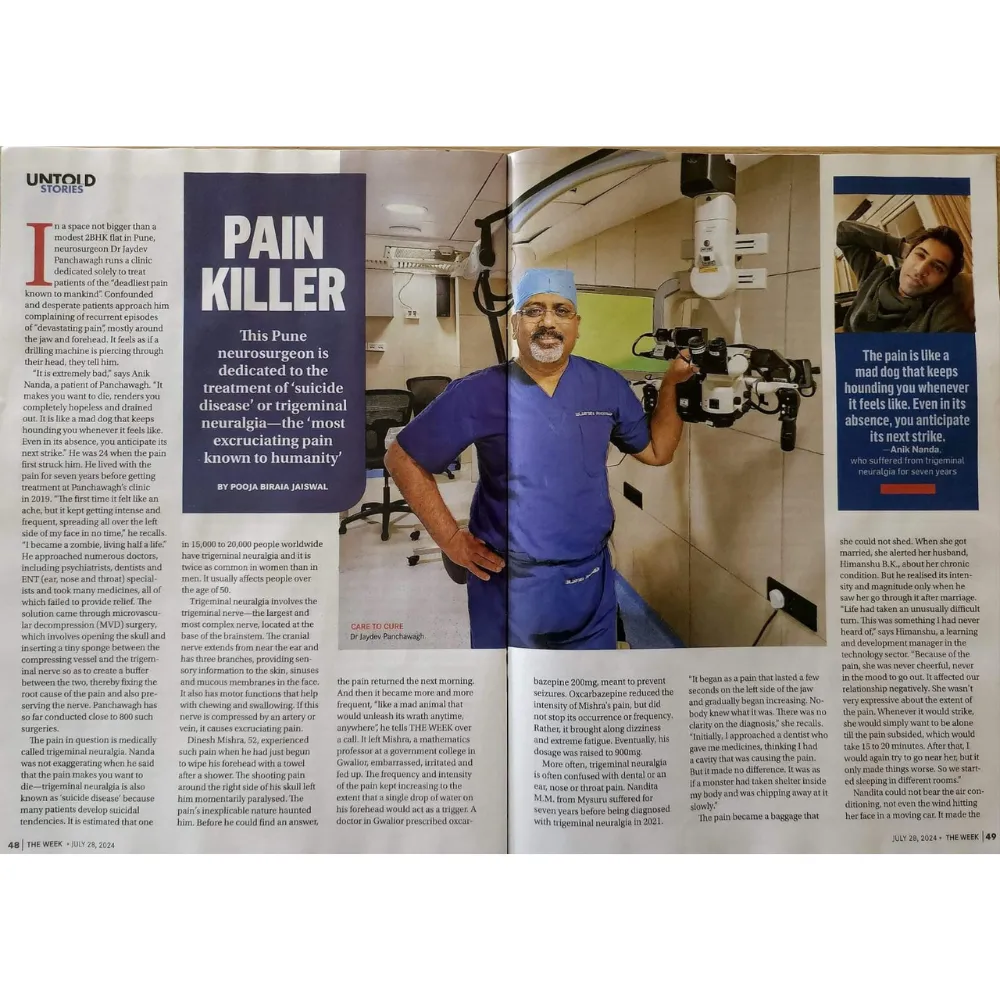
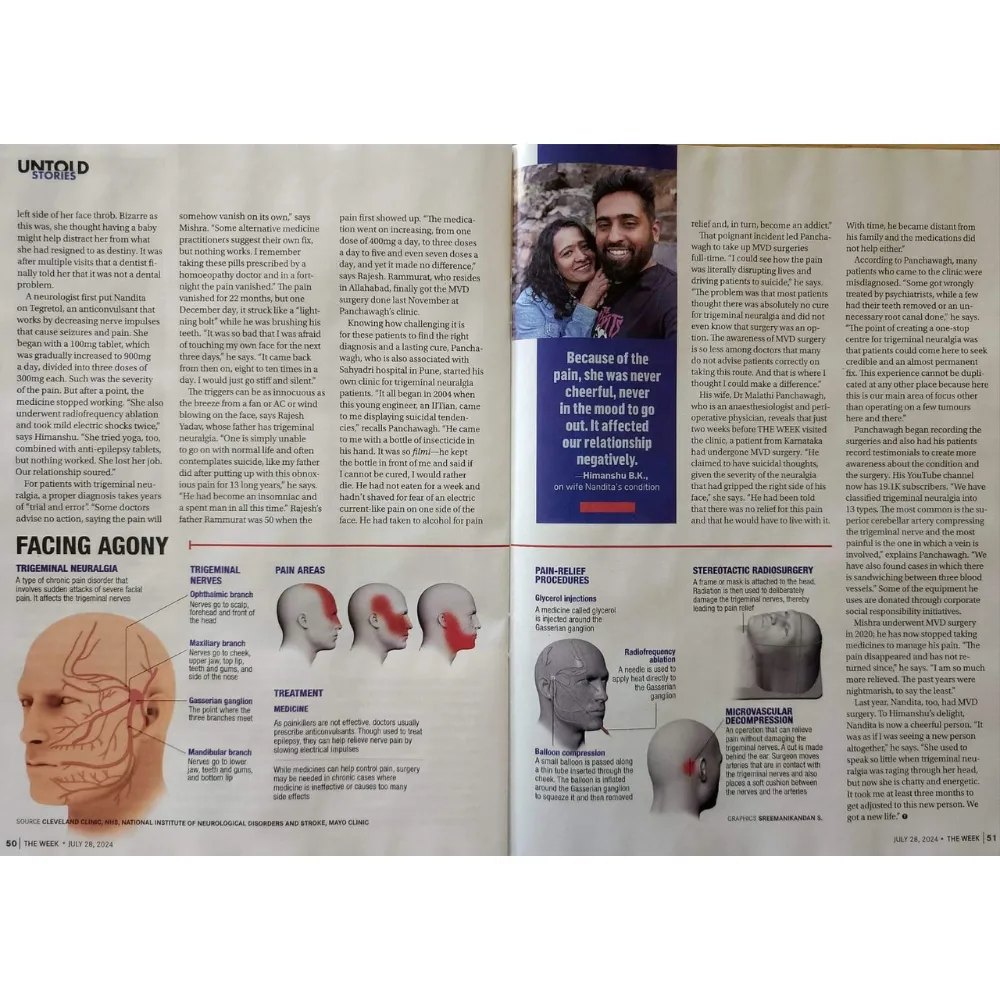
Inside a Pune neurosurgeon's clinic solely dedicated to treat the 'most excruciating' pain
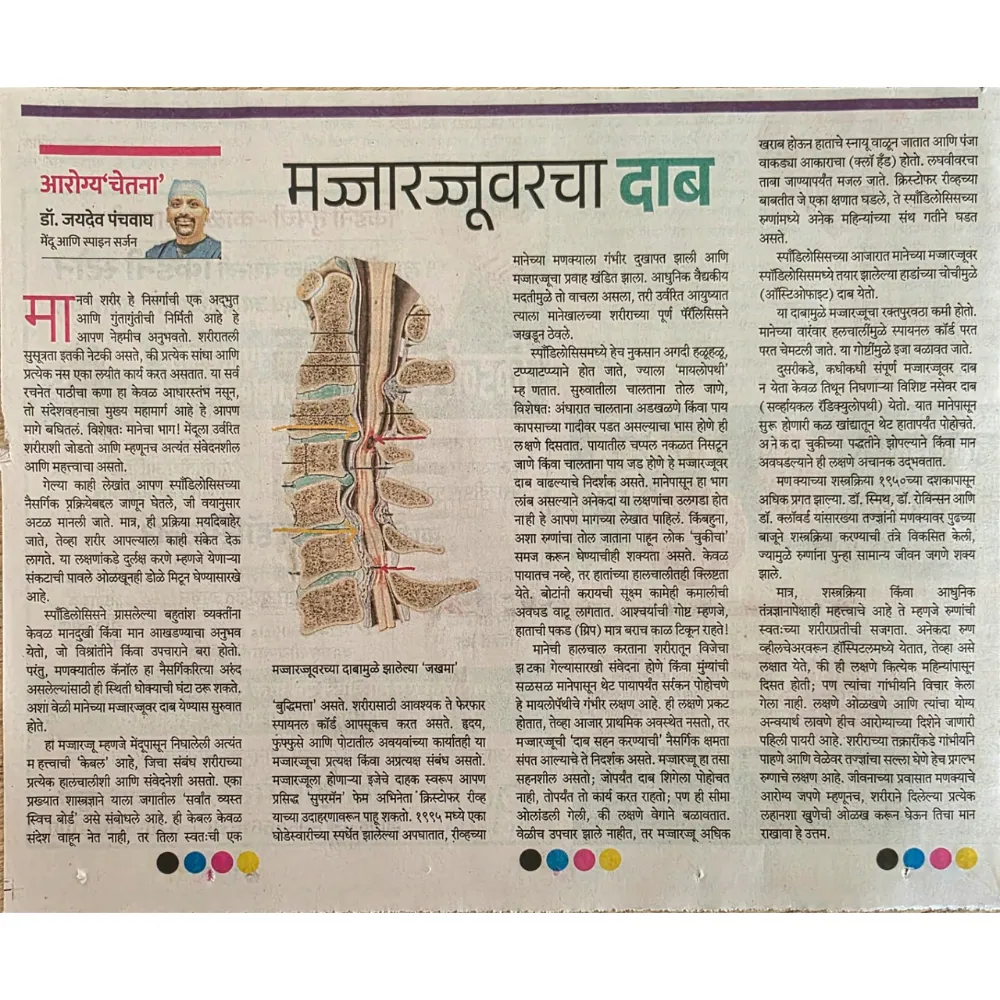
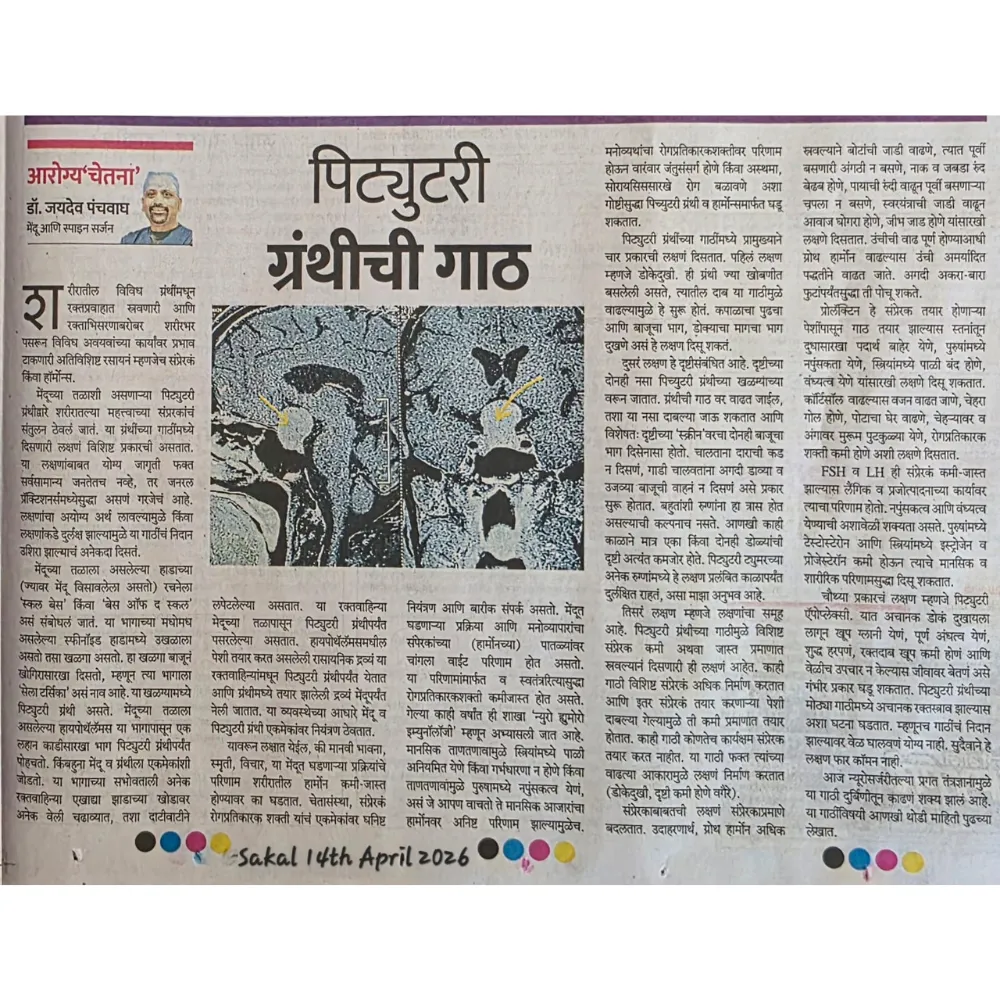
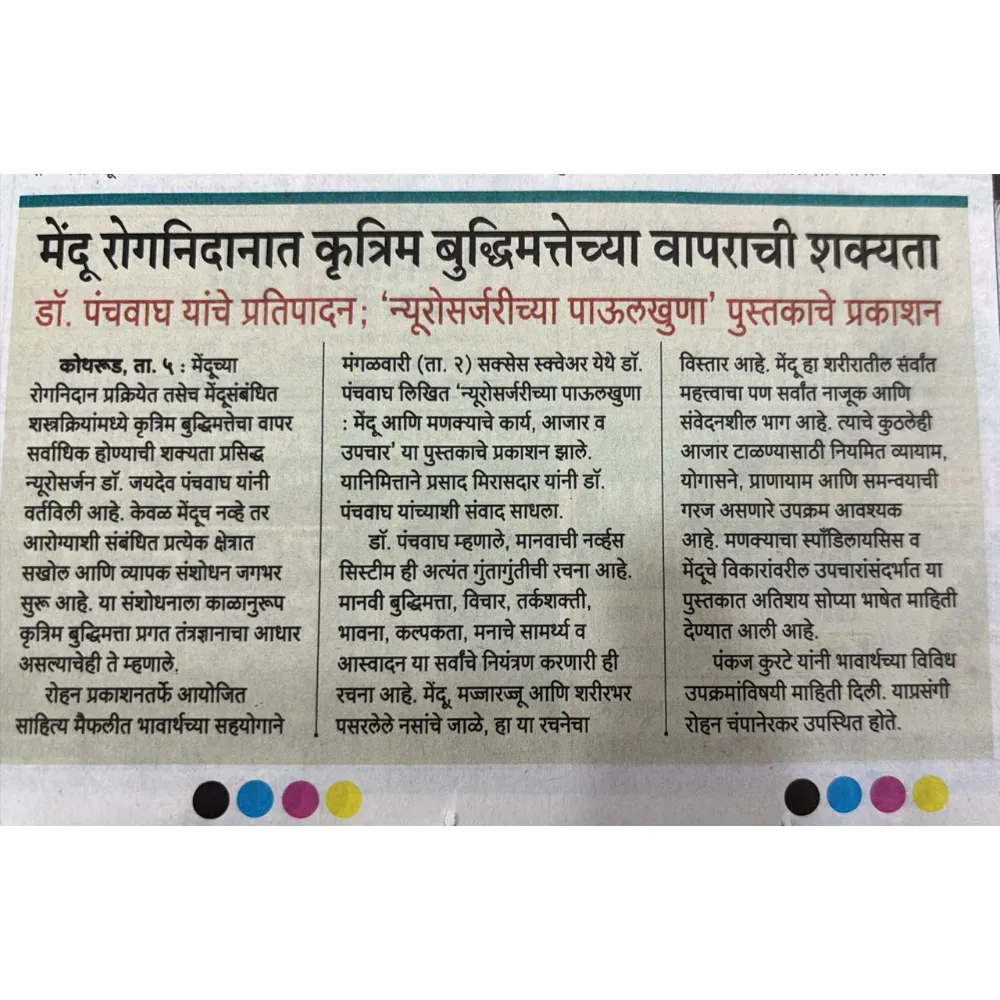
न्यूरोसर्जरीच्या पाउलखुणा

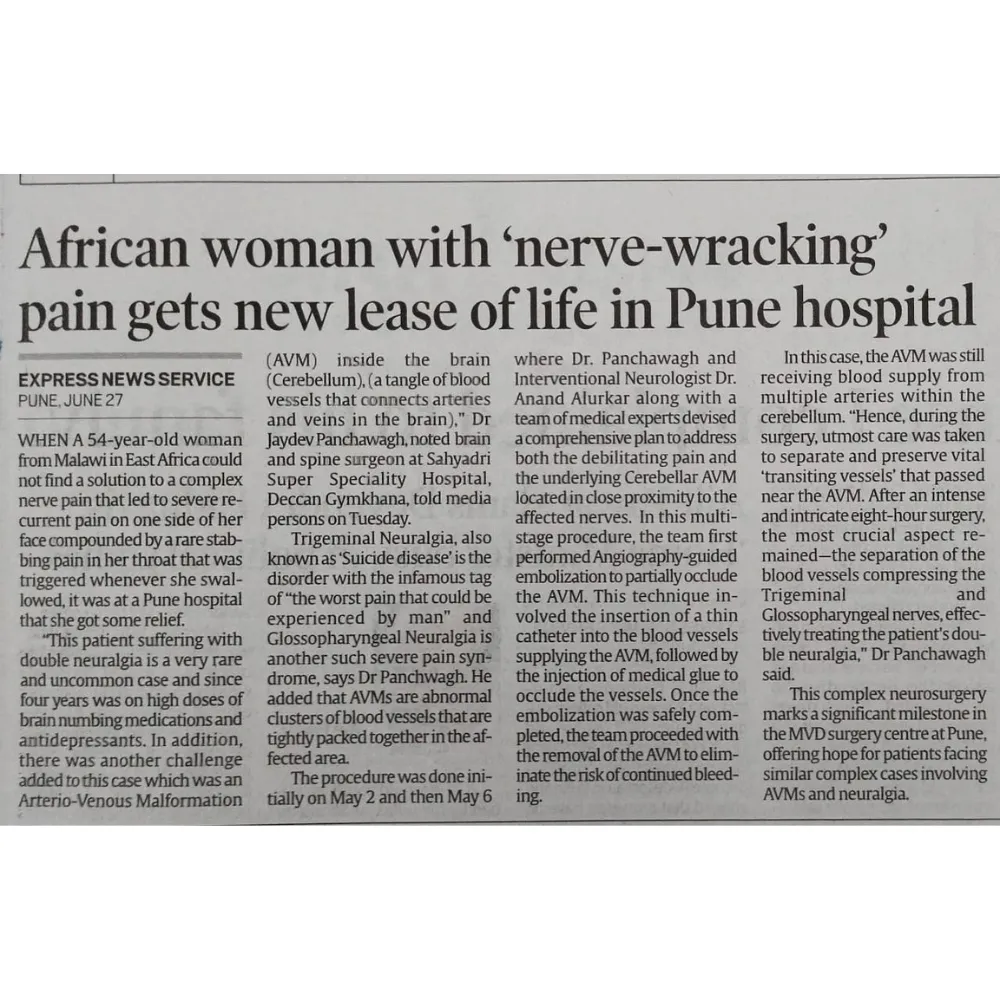
Trigeminal Neuralgia: When The Right Surgery Can End Years Of Debilitating Facial Pain

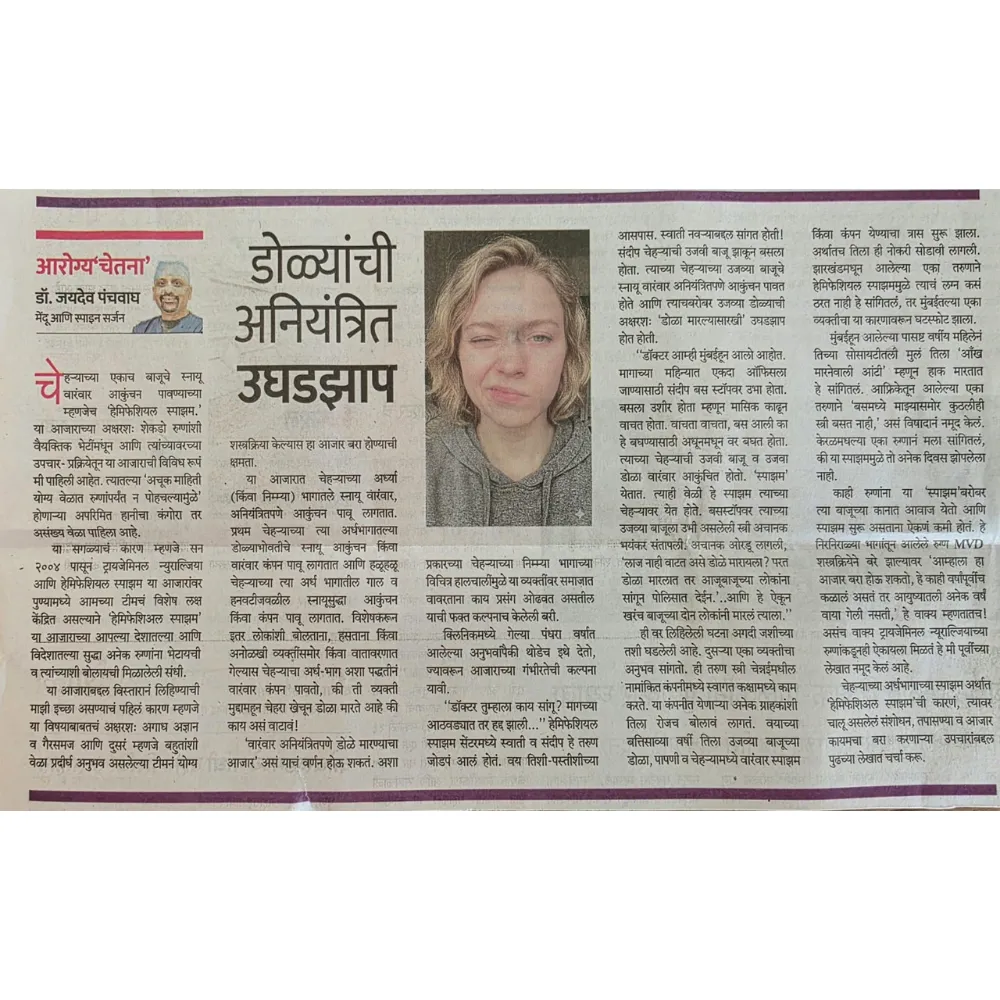
When one side of your face won’t stop twitching

Neurosurgery built on experience.
Guided by precision.
Centred on the patient


Links
Treatments
Contact
+91 9011333841, +91 7720948948
102, Bhagyatara Society, Erandwane, Pune, India
The information on this website is for educational purposes only and does not constitute medical advice. Consult a qualified neurosurgeon for guidance specific to your condition. Read full disclaimer →
Copyright @2026 | Dr. Jaydev Panchawagh | Praavi Medicare