Lumbar Canal Stenosis Pain: How to Escape the Slow Prison of Leg & Back Struggle
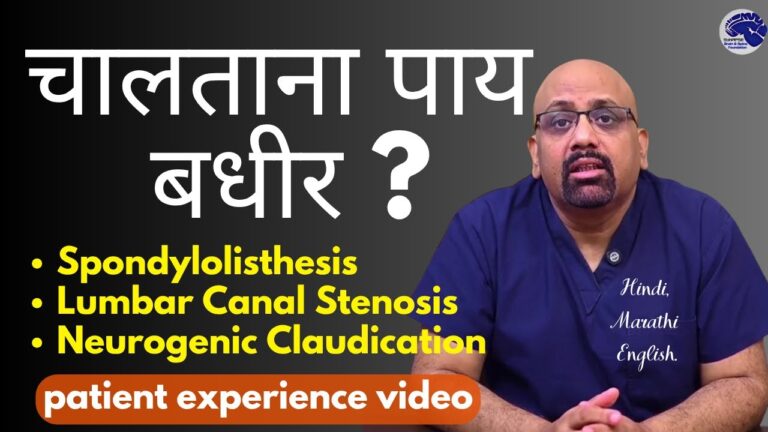
We tackle a condition that quietly steals the independence of many older adults: Lumbar Canal Stenosis and its key symptom, Neurogenic Claudication. This disorder, often mistakenly dismissed as a natural part of aging, narrows the spinal canal and aggressively compresses the nerves, leading to debilitating pain and loss of mobility. The profound impact, and the potential for a complete recovery, is best illustrated by the compelling story of our patient, Mr. Prakash Gupte, whose journey from walking 6 kilometers to needing a wheelchair shows us why early diagnosis and timely intervention are absolutely crucial.
The Journey of Prakash Gupte: From 6 km to 100 Meters:
Mr. Gupte’s experience vividly illustrates the progressive nature of Lumbar Canal Stenosis, highlighting its typical stages:
1. The Onset and Initial Management (2011 – 2012)
Initial Symptoms: Sciatica-type pain began in one leg, spreading to both, radiating from the low back to the calf.
Diagnosis: Identified as L4-L5 Retrolisthesis.
Initial Success: He opted for non-surgical management, finding significant relief through Yoga, which allowed him to walk nearly 6 kilometers at a stretch without stopping for years.
2. The Progressive Decline (2020)
Pain Returns Severely: By 2020, the pain dramatically increased, and his walking distance plummeted to a mere one kilometer.
Critical Sensory Change: His feet became heavy and numb, eventually causing the distinct sensation of “walking on foam rubber” on the soles of his feet.
Severe Mobility Restriction: He was ultimately reduced to walking only 100-150 meters (4-5 minutes) and could only stand for about 5 minutes before pain forced him to sit.
3. Loss of Independence
Activities Avoided: He could not stand in any queue and had to avoid shops with more than 3-4 steps.
Wheelchair Necessity: Using a wheelchair became compulsory for trips, and he was forced to stop and sit on benches every 100-150 meters in his housing society.
The Power of Timely Intervention:
Despite understandable fear regarding his age and spine surgery, the decision to proceed led to an immediate and life-changing recovery:
1. Immediate Post-Surgical Results
Instant Relief: He was made to walk the very next day, and he could immediately appreciate that his pain was gone and his legs were lighter.
Emotional Change: He remarked, “I had not walked this freely in so many years!!”
Symptom Resolution: The numbness, heaviness, and pain from his back downwards disappeared immediately after surgery.
2. Restored Independence
Regained Distance: Two months post-surgery, he increased his daily walking to nearly 1.5 kilometers.
Climbing Stairs: He can now climb two flights of stairs comfortably, a task previously impossible.
Dr. Jaydev Panchwagh’s Message: Don’t Attribute Treatable Symptoms to Aging
This is the central message for our listeners and readers: Neurogenic Claudication is eminently treatable when accurately diagnosed.
Misdiagnosis Risk: Many older individuals attribute these symptoms to aging and passively accept a life of dependence, ignoring the underlying cause.
The Secret to Success: The key to early diagnosis lies in recognizing the positional nature of the symptoms: pain and numbness in the legs relieved by sitting.
The Outcome: When correctly diagnosed, surgery can effectively treat this condition, restoring independence, mobility, and a significantly improved quality of life.






Leave a Reply