Namaste. As a neuroanesthesiologist, I often see patients who have lost hope because their pain is invisible to others. Today, instead of giving you a medical lecture, I want to tell you a story.
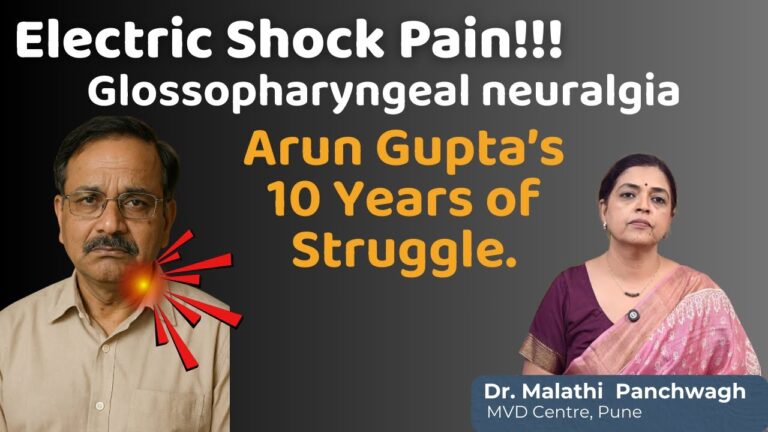
It is the story of Mr. Arun Gupta, a 58-year-old school principal from Lucknow. Arun was a quiet, dignified man who loved two things: listening to classical music and enjoying his evening tea with his family. But when he walked into our clinic, he hadn’t enjoyed a cup of tea in months. His life had been turned upside down by a mysterious, terrifying pain.
When Eating Becomes a Nightmare
For over a year, Arun had been suffering from sudden, electric shock-like attacks of pain deep in his throat and ear.
It started silently. At first, it was just a twinge when he swallowed. But soon, it became a monster. The pain was so intense that it would stop him mid-sentence. He stopped eating properly because he was terrified to swallow. He stopped talking to his grandchildren because speaking triggered the shocks. Even a simple yawn or a cool breeze hitting his face could set it off.
Arun did what anyone would do—he sought help. He visited dentists who thought it was a tooth infection. He visited ENT specialists who treated him for tonsillitis, pharyngitis, and even acid reflux. He took course after course of antibiotics, but nothing changed.
He was eventually put on medications like Tegretol, which helped for a short while, but the pain always came back, stronger than before.
Decoding the Diagnosis: Glossopharyngeal Neuralgia
When Arun sat down in our clinic and described his pain, we suspected the culprit immediately: Glossopharyngeal Neuralgia.
This is a rare condition, often rarer than its cousin Trigeminal Neuralgia. The clues were in the details:
The Location: Pain starting deep in the throat and shooting to the ear (or vice versa).
The Triggers: Swallowing saliva, chewing food, and speaking.
To confirm our suspicion, we performed a simple clinical test right there in the office. We gently touched the back of his throat with a cotton swab. He winced in agony. Then, we applied a numbing local anesthetic spray to the area. The pain vanished.
That was our answer. It wasn’t his teeth, and it wasn’t a sore throat. It was the nerve.
The MRI Dilemma: Trusting Symptoms Over Scans
We ordered an MRI, but here is where things get tricky. The MRI came back looking “normal.” It showed no obvious tumor or large compression.In many places, a patient might be sent home at this point, told that “nothing is wrong.” But we know that MRI scans often miss tiny blood vessels pressing against delicate nerves. Arun’s symptoms were so classic, so textbook, that we trusted his story more than the scan.We decided to proceed with Microvascular Decompression (MVD) surgery. Arun and his family, tired of the temporary fix of painkillers, agreed.
The Surgery and the Return of Joy
In the operating room, we made a small opening behind his ear. Just as we suspected, despite the “normal” MRI, we found a small artery pressing tightly against his Glossopharyngeal nerve.We carefully moved the artery away and placed a tiny, soft pad between the vessel and the nerve to keep them apart.The result? The next morning, Arun woke up and did something he hadn’t done without fear in a year: he swallowed. There was no pain.By his two-week follow-up, the transformation was incredible. The fearful, quiet man was gone. Mr. Gupta was back to his confident self, leading meetings at his school and, most importantly, enjoying his evening tea and music with his family again.
Glossopharyngeal Neuralgia is rare, but it can ruin lives if it is treated as a simple sore throat or dental issue.
If you or someone you know is suffering from:
Electric shock-like pain in the throat or ear.
Pain triggered by swallowing, chewing, or yawning.
Symptoms that antibiotics and dental treatments haven’t fixed.
Please do not lose hope. Even if your MRI looks normal, the problem might still be there, and it is treatable. With the right diagnosis and timely treatment, relief is not just possible—it is highly likely.






Leave a Reply